Sample retention process flowchart
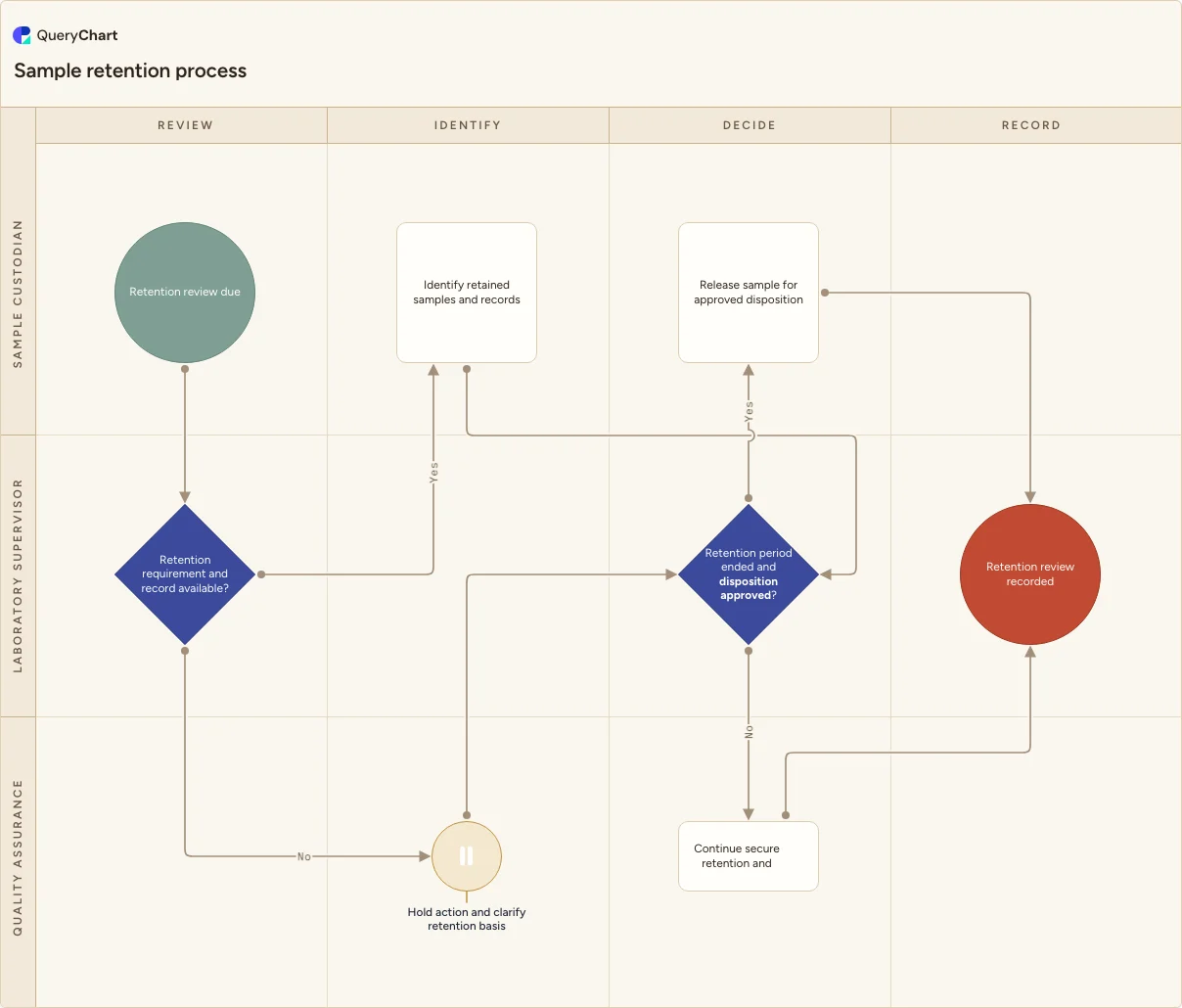
An editable sample retention workflow for reviewing retention records, identifying retained samples, deciding whether an approved disposition can proceed, continuing secure retention and recording the review.
What the sample retention process is
This template maps a scheduled retention review rather than imposing a fixed retention period. It identifies the sample and the record that supports its retention, then separates a confirmed disposition from continued secure retention.
The exception path matters because a missing retention basis or incomplete record is not a reason to dispose of a sample. The chart holds action, clarifies the source and records the next review instead.
This template does not establish compliance with any standard or regulation. Set the retention basis, review timing, authorization roles and disposition records according to the requirements that apply at your site.
What this flowchart covers
In this template
- Four stages from retention review through a recorded outcome.
- A labelled decision for confirming the retention requirement and supporting record.
- A second decision that separates approved disposition from continued retention.
- A controlled hold and clarification path for incomplete retention information.
- Editable swimlanes for custody, supervisory review and quality oversight.
When to use this template
- You manage retained samples, reference materials or records that need periodic review.
- You need to distinguish a scheduled review from an automatic disposal instruction.
- You are documenting responsibilities for sample custody, disposition approval and recordkeeping.
How it works
Name the retention basis
Link the decision to the policies, contracts, study documents or quality records your laboratory relies on. Do not add a generic time limit where one is not universally applicable.
Define disposition authority
Specify which role can authorize release for a disposition and what record is needed before the sample leaves retained status.
Set the unresolved-record route
Describe who investigates a missing or conflicting record, where the sample remains while it is resolved and how the next review is scheduled.
Review real retention cases
Test one sample that remains retained and one that reaches an approved disposition. Update the chart where actual responsibilities or records differ.
Frequently asked questions
What is included in a sample retention process?
The process reviews the retention basis and record, identifies the affected sample, decides whether an approved disposition can proceed or secure retention continues, then records that outcome.
Does a retention review mean a sample should be disposed of?
No. A review is a decision point, not an automatic disposal instruction. The sample should remain retained until its documented basis and any required disposition approval support a different action.
How should missing retention information be handled?
Hold the disposition action, preserve the sample's current status and route the record gap to the role that can clarify it. Record the outcome and next review rather than making an unsupported assumption.
Where this process fits
In most operations this process follows Sample storage process flowchart and hands off to Sample disposal process flowchart.
It is one step in Sample lifecycle.
Step 3: Sample receipt process flowchart
Step 4: Sample log-in process flowchart
Step 6: Sample storage process flowchart
An editable sample storage workflow for assigning a suitable location, using interim holds when capacity is unavailable, verifying location and status, and updating inventory records.
Step 7: Sample retention process flowchart You are here
An editable sample retention workflow for reviewing retention records, identifying retained samples, deciding whether an approved disposition can proceed, continuing secure retention and recording the review.
Step 8: Sample disposal process flowchart
An editable sample disposal workflow for confirming identity and disposition information, segregating material, selecting an authorized disposal route, retaining unresolved samples and recording status.