Sample stability process flowchart
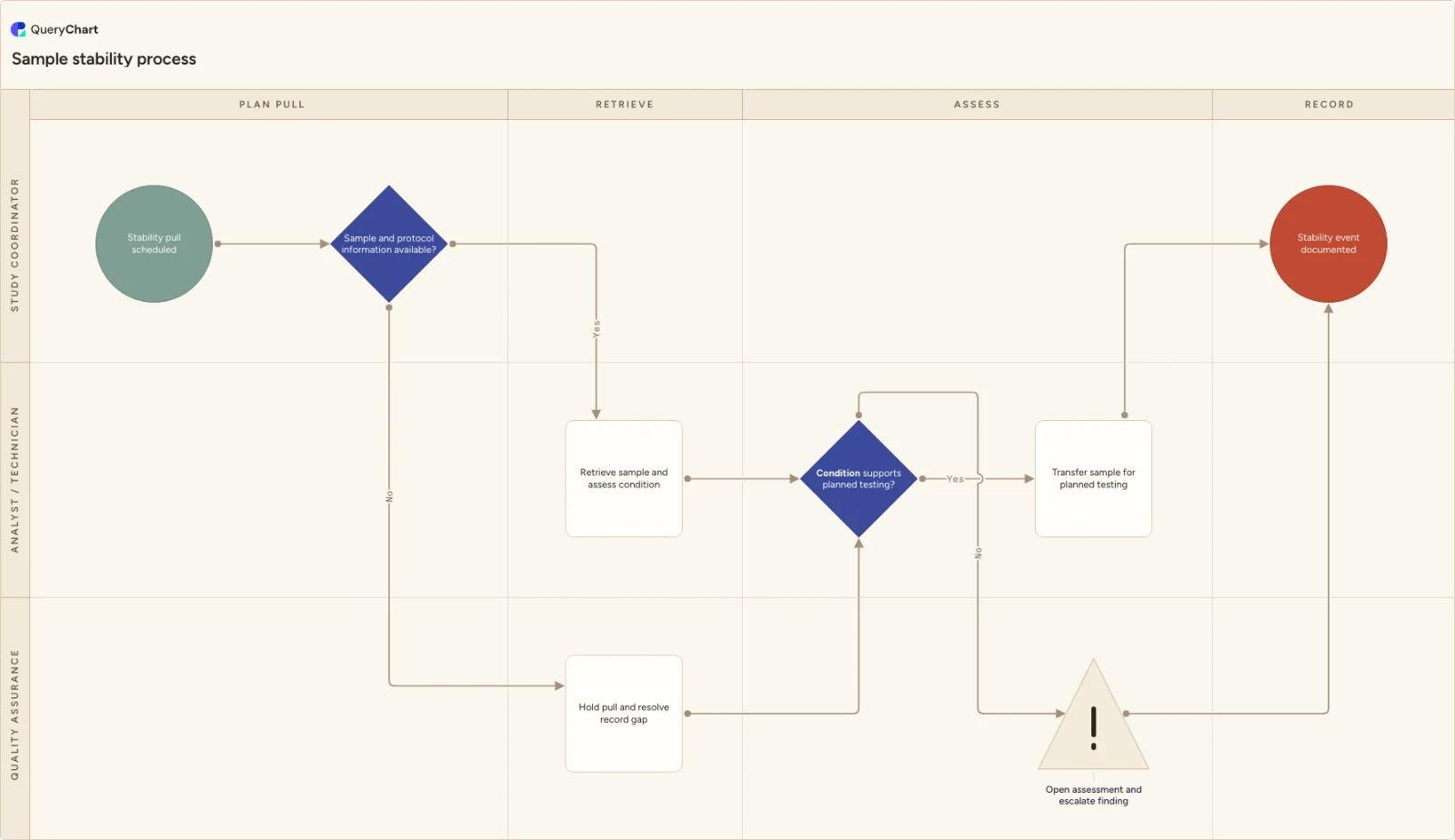
An editable sample stability workflow for planning a pull, confirming sample and protocol information, assessing retrieved sample condition, transferring suitable material for testing and escalating findings.
What the sample stability process is
This template maps one stability event from a scheduled pull through retrieval, condition assessment, testing transfer or a documented finding. It is intended for teams to adapt to their own study plans, storage arrangements and review records.
Two decisions keep the workflow useful: missing sample or protocol information pauses the pull for record resolution, while an observed condition that does not support planned testing triggers an assessment and escalation rather than an automatic conclusion.
This template does not establish compliance with any standard or regulation. Confirm the protocol, storage conditions, observation criteria, testing method and approval roles that apply at your site before making it effective.
What this flowchart covers
In this template
- Four stages from a planned pull through a documented stability event.
- A labelled decision for confirming sample and protocol information before retrieval.
- A condition-assessment decision that separates planned testing from an escalated finding.
- A controlled hold route for missing records or unclear study context.
- Editable lanes for study coordination, testing and quality oversight.
When to use this template
- You manage stability samples that move from scheduled storage pulls to planned testing or assessment.
- You need a process map that makes protocol context and sample condition visible at the time of retrieval.
- You are revising study operations, training material or an exception-handling workflow.
How it works
Connect the study records
Add the protocol, pull schedule, storage reference and sample record your team uses. Keep study-specific timing and acceptance criteria in the approved local documents.
Define retrieval checks
Specify which identifiers, storage observations and custody fields must be checked when a sample is retrieved for the planned event.
Map assessment ownership
Name who assesses an unexpected condition, what evidence they review and how the sample remains controlled while the decision is open.
Test two events
Walk one normal pull and one record or condition exception through the chart with the relevant teams before using it as a live procedure.
Frequently asked questions
What does a sample stability process flowchart cover?
It covers a planned stability pull, confirming that the sample and protocol information are available, retrieving and assessing the sample, sending suitable material to planned testing or escalating a finding, and documenting the event.
What happens when stability records are incomplete?
Pause the planned action, retain the sample in its controlled status and resolve the record gap with the responsible owner. The missing context should be clarified before the sample is treated as a routine pull.
Does an unusual sample condition determine a stability conclusion?
No. The chart routes the observation to an assessment. Your protocol, records, method and authorized review determine the conclusion for a particular study or sample.