Design change approval process flowchart (furniture in production)
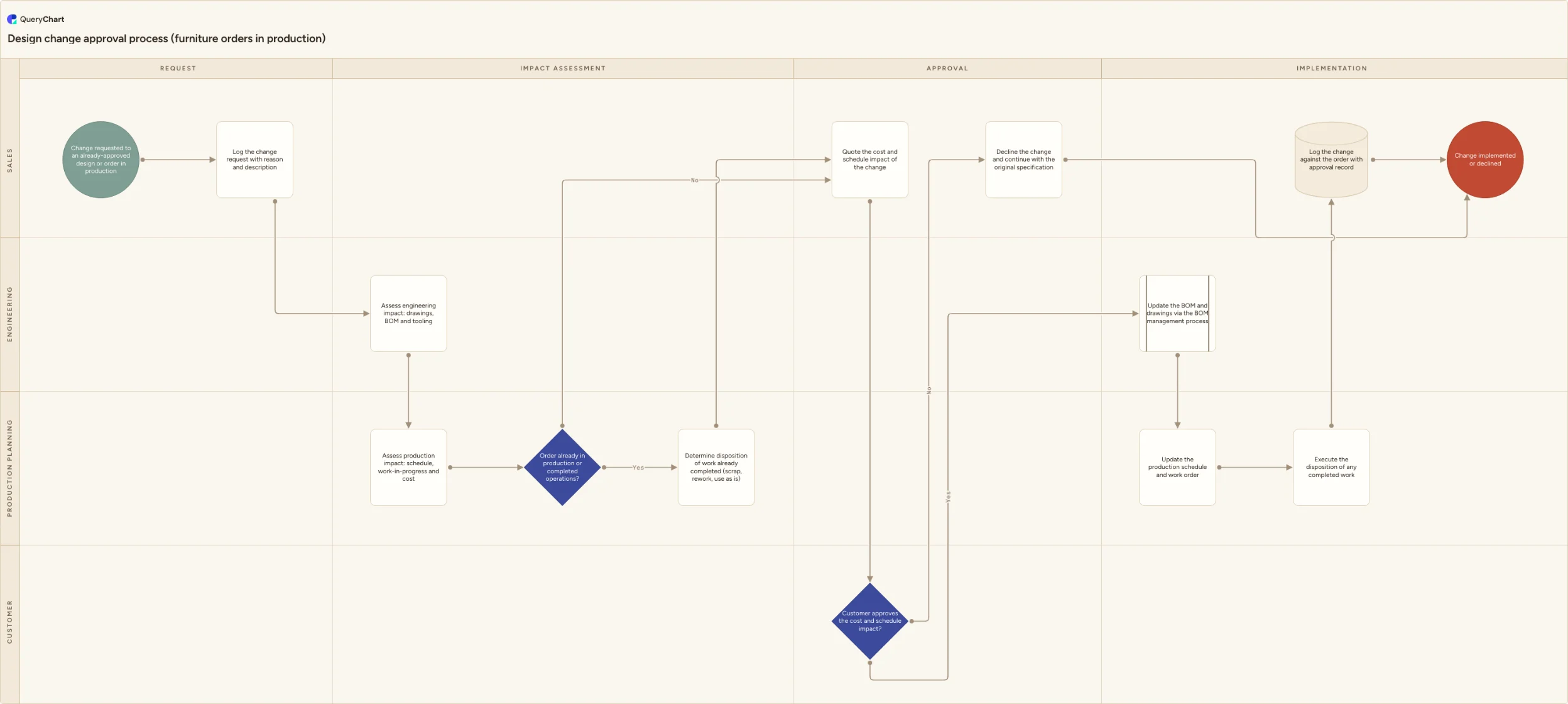
A design change approval process flowchart covering engineering and production impact assessment, a completed-work disposition, and customer cost approval.
What the design change approval process flowchart (furniture in production) process is
A change requested after production has started is a fundamentally different situation than a change requested during design, and treating them the same way is how a factory ends up either refusing reasonable mid-production changes or absorbing their cost silently. This template exists specifically for changes to an order already past the design-approval stage — work may be in progress, materials may be committed, and any of that has to be accounted for before the change is priced.
The disposition step for completed work is what makes this different from the initial design approval process. A change might mean scrapping a partially built component, reworking it, or deciding the existing work is still usable as is — and that decision has to happen before the cost and schedule impact can be honestly quoted to the customer.
The process runs across four phases (request, impact assessment, approval and implementation) and four lanes (Sales, Engineering, Production planning and Customer), requiring the customer to approve cost and schedule impact before any BOM, drawing or schedule update happens — not after the change has already been implemented.
What this flowchart covers
In this template
- Engineering and production impact assessed separately, since a change can affect drawings and BOM differently than it affects schedule and work-in-progress.
- A check for whether the order is already in production, triggering a disposition decision for any completed work rather than skipping straight to repricing.
- Disposition options for completed work — scrap, rework, or use as is — priced into the change's cost impact rather than absorbed silently.
- A customer approval gate on cost and schedule impact before any implementation begins, not after.
- Implementation that updates the BOM and drawings through the BOM management process and the production schedule, with the completed-work disposition executed as part of the same change.
When to use this template
- You are documenting how mid-production design changes get handled and the current process doesn't distinguish them from changes requested before production started.
- Changes have been implemented on customer request without a clear disposition decision for work already completed, absorbing unaccounted cost.
- You need a documented approval gate that requires customer sign-off on cost and schedule impact before implementation, not a change made first and billed for after.
- You want mid-production changes to flow properly into BOM version control rather than being tracked as an informal side note to the original order.
How it works
Assess engineering and production impact separately
A change can require new drawings and a BOM update without significantly affecting the production schedule, or vice versa. Assessing both explicitly, rather than one general 'impact assessment,' gives a more accurate picture of what the change actually costs.
Decide disposition for completed work before pricing the change
"Determine disposition of work already completed" needs to happen before quoting cost and schedule impact — whether existing work is scrapped, reworked, or usable as is directly affects what the change actually costs.
Require customer approval before implementation, not after
"Customer approves the cost and schedule impact?" should gate implementation — no BOM update, drawing change or schedule adjustment should happen until the customer has agreed to the quoted impact.
Route BOM updates through proper version control
"Update the BOM and drawings via the BOM management process" means a mid-production change goes through the same controlled revision process as any other BOM update, not an off-the-books edit made outside that system.
Frequently asked questions
How is this different from the custom furniture design approval process?
The design approval process governs the initial design sign-off before production ever starts. This process is specifically for changes requested to a design that's already been approved and may already be in production — it adds the disposition question for completed work that the initial approval process doesn't need to consider.
What does 'disposition of completed work' mean?
It's the decision about what happens to any work already done on the order before the change was requested — whether it needs to be scrapped and remade, reworked to match the new design, or is still usable as is despite the change. This decision directly affects what the change actually costs, which is why it has to happen before quoting the impact to the customer.
Why does the customer need to approve cost and schedule impact before anything is implemented?
Because implementing a change first and presenting the bill afterward removes the customer's ability to decide whether the change is worth its cost and delay. Requiring approval before implementation keeps the customer in control of that tradeoff, and protects the business from absorbing an unapproved cost.
What happens to BOM and drawing updates from a mid-production change?
They go through the same BOM management process used for any other revision — properly versioned, with the previous version marked superseded — rather than being tracked as an informal exception to the original order's documentation.
Where this process fits
In most operations this process hands off to Bill of materials (BOM) management process flowchart.
Comes after
- Bill of materials (BOM) management process flowchart — A bill of materials management process flowchart covering creation, buildability verification, release as a controlled version, and engineering change control.