Laboratory investigation closure process flowchart
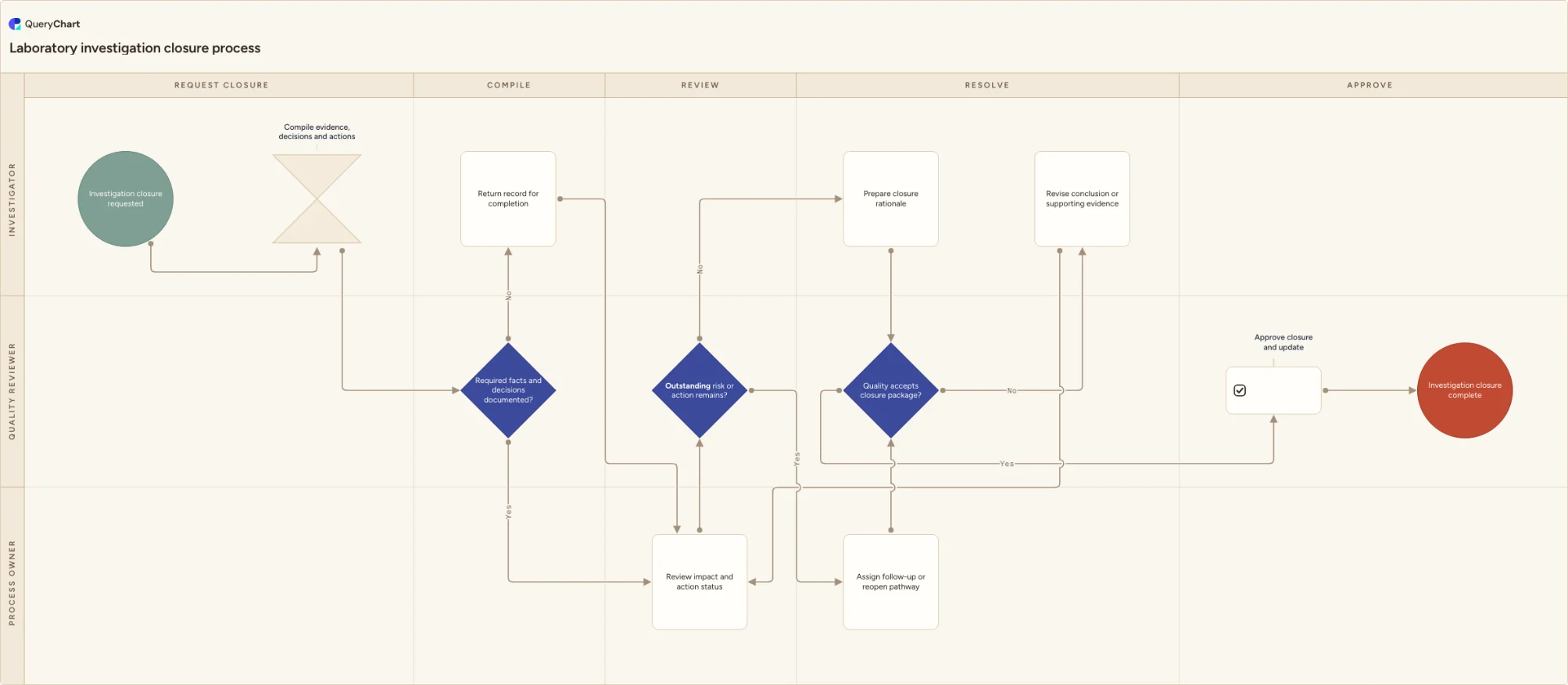
An editable laboratory investigation closure workflow for compiling evidence, reviewing impact and action status, resolving open risks, obtaining quality acceptance and updating the closure record.
What the laboratory investigation closure process is
A closure request needs more than a completed narrative. This workflow first compiles the evidence, decisions and actions, then returns incomplete records to the investigator before the impact and action status review begins.
Outstanding risk or action has its own route to a follow-up or reopened pathway. Quality can accept a complete closure package or return the conclusion and supporting evidence for revision, preserving the reason the record was not accepted.
Configure closure requirements, risk review, follow-up ownership and electronic status updates to the investigation types and quality governance used in your laboratory.
What this flowchart covers
In this template
- An investigator compiles the evidence, decisions and action record needed for a closure request.
- Incomplete facts or decisions return to the investigator before closure review advances.
- Open risk or action is routed to a follow-up or reopened pathway instead of being hidden in the closure record.
- A quality reviewer accepts the closure package or returns it for a documented revision.
When to use this template
- You need a closeout process for laboratory deviations, incidents, OOS work or other investigations.
- Investigation records are marked closed while actions, risk questions or supporting evidence remain unclear.
- Quality reviewers need a consistent return path when a conclusion or closure package is incomplete.
How it works
List closure evidence
Replace the general evidence box with the facts, impact decisions, root-cause record, actions and approvals that your local investigation type requires.
Set open-item routing
Define which outstanding risks or actions reopen an investigation and which can move to a separately controlled follow-up record.
Configure status updates
Link acceptance to the correct system status, communication record and retention location so a reviewer can trace why and when closure was approved.
Frequently asked questions
What does a laboratory investigation closure process cover?
It covers compiling investigation evidence, checking that decisions are documented, reviewing impact and open actions, assigning follow-up where needed, obtaining quality acceptance and updating the closure status record.
Why review outstanding actions before closure?
An investigation may have reached a conclusion while actions or risks still need an accountable route. The separate decision prevents those items from being obscured by an administrative closure.
What should happen when Quality does not accept the closure package?
Return the record with the reason for revision, complete the required conclusion or evidence work, and submit it for another review. The local process should define acceptance authority and record retention.
Where this process fits
In most operations this process follows Corrective action effectiveness process flowchart.
It is one step in Laboratory investigations.
Step 5: Corrective action effectiveness process flowchart
An editable corrective action effectiveness workflow for defining the intended outcome, reviewing follow-up evidence, identifying recurrence or shortfall, revising action plans and recording review results.
Step 6: Laboratory investigation closure process flowchart You are here
An editable laboratory investigation closure workflow for compiling evidence, reviewing impact and action status, resolving open risks, obtaining quality acceptance and updating the closure record.