Warehouse Receiving Process
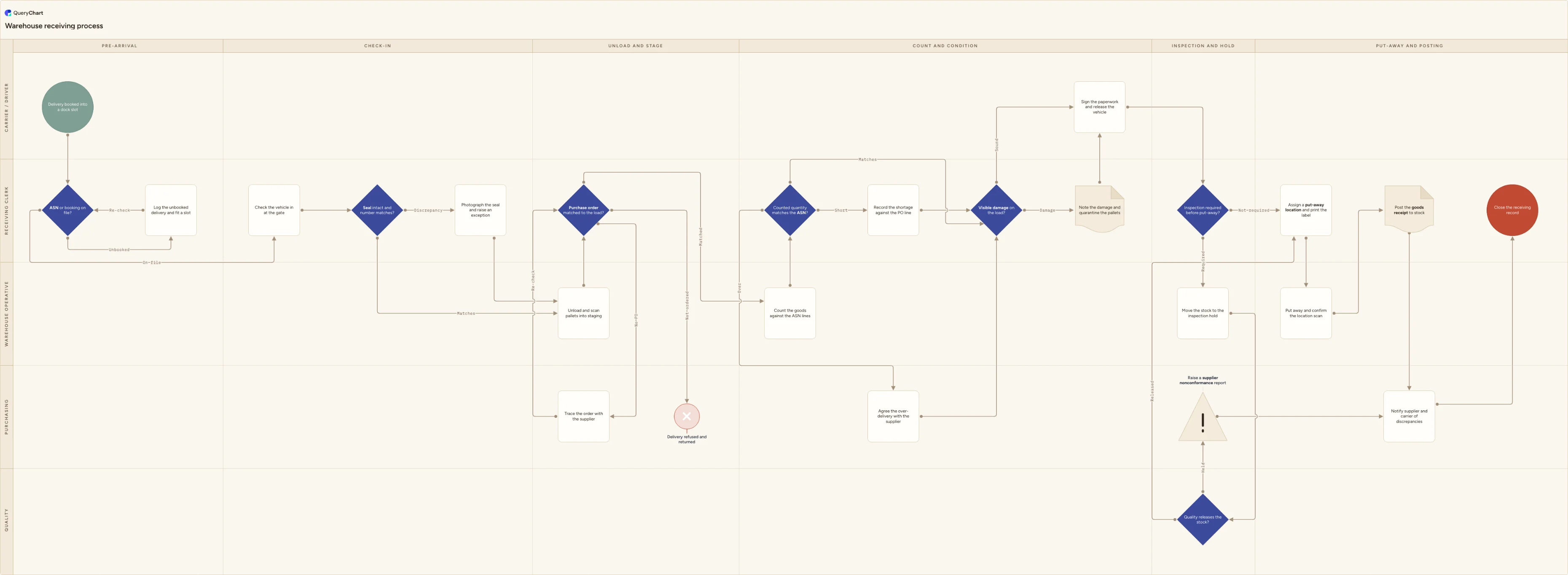
Warehouse receiving process template for dock booking, ASN and PO matching, count and damage checks, inspection holds, putaway, and goods receipt posting.
What the warehouse receiving process is
Warehouse receiving starts before a trailer reaches the dock. A booked delivery and advance shipping notice let the team verify what should arrive, where it belongs and how it should be handled before unloading begins. On the floor, the receiving clerk checks the vehicle and seal, the warehouse team unloads into a traceable staging location, and the receipt is matched to the purchase order and counted against the ASN. That sequence is the difference between a controlled goods-in record and stock that simply appeared on the dock.
The exception paths are the useful part of a receiving SOP. Unbooked deliveries need a slot and a record, an unknown purchase order needs purchasing to decide whether to accept the goods, and shortages, overages and visible damage need evidence while the carrier is still present. The template routes affected stock to a named hold and makes the supplier or carrier notification explicit. It does not assume every delivery needs a quality inspection; instead it makes the release decision visible where the product, supplier or client rules require it.
Only released stock is assigned a putaway location, scanned into that location and posted as a goods receipt. Adapt the lanes to the real teams at your site, then set your booking, acceptance, evidence, hold and notification rules. The result is an editable process map that connects inbound planning to putaway, inventory accuracy and supplier follow-up rather than treating unloading as the end of receiving.
What this flowchart covers
In this template
- Five swimlanes for carrier or driver, receiving clerk, warehouse operative, quality and purchasing across booking, check-in, staging, condition checks, holds and stock posting.
- A booking and ASN decision with an unbooked-delivery loop, so inbound work is scheduled rather than accepted without an accountable slot.
- Vehicle and seal verification before unloading, including a documented discrepancy route that preserves evidence before the load is broken down.
- Purchase order, quantity and condition checks with separate shortage, overage, damage and unordered-goods paths instead of silently posting an expected quantity.
- A conditional inspection hold, quality release decision, directed putaway, location scan and goods-receipt posting sequence that makes released inventory traceable.
When to use this template
- You need a warehouse receiving SOP that gives dock teams consistent steps for scheduled, unbooked and exception deliveries.
- Shortages, damage claims or unidentified pallets are being discovered after the carrier has left and the available evidence is weak.
- Your WMS or ERP rollout needs agreement on receiving statuses, inspection holds and the handoff from a dock-stage scan to putaway.
- Purchasing, quality and warehouse operations need a shared boundary for who accepts an exception and when stock can become available.
- You are linking inbound receiving to putaway, inventory control and supplier performance review in one operating-process library.
How it works
Set the booking and ASN rule
Define which suppliers or load types need an appointment and ASN, the latest acceptable notice and what the gate does with an unbooked arrival. Make the slot owner visible so a driver is not left waiting for an informal decision.
Name the evidence collected on the dock
Specify the documents, scans, photographs and seal checks required before a trailer is released. Match them to the proof your carrier terms, supplier agreement and internal claim process actually require.
Define acceptance and variance authority
List who may accept a shortage, overage, wrong item or unordered delivery, and whether the receipt remains blocked while that decision is open. The dock team should record the facts rather than make an unapproved commercial decision.
Configure the hold and inspection path
Use the real WMS status and physical location for damaged, quarantined or inspection-required stock. State who can release it and how that release prevents allocation until the decision is recorded.
Walk recent exceptions through the chart
Test one normal delivery, one count variance and one damaged pallet with the teams who handled them. Add every real handoff, record and time-sensitive notification the chart currently misses before approving it as a live SOP.
Frequently asked questions
What are the main steps in a warehouse receiving process?
A delivery is booked and verified against its ASN or purchase order, checked in, and unloaded into a receiving stage. The team counts and inspects the goods, records shortages, overages or damage, and decides whether any stock needs inspection hold. Released stock receives a putaway location, is scanned into the destination and is posted as a goods receipt. The process closes only after unresolved discrepancies have an owner and supplier or carrier notification.
What should happen when a warehouse receiving count does not match the ASN?
Recount first, then record the actual quantity and preserve the delivery evidence. A shortage, overage or unidentified item should be routed to the person authorized to accept, correct or reject it rather than received automatically at the ASN quantity. The warehouse can keep the goods in a controlled status while purchasing, the supplier or the client resolves the commercial decision.
Why use an inspection hold during warehouse receiving?
A hold lets the warehouse record that the goods physically arrived while preventing allocation before the required check is complete. It is useful for damage review, supplier-specific inspection, client-owned goods, lot control or any condition your operation defines. The exact criteria and release authority vary by operation, so the template is designed to be adapted rather than treated as a universal requirement.
Where this process fits
In most operations this process hands off to WMS Receiving Process.
It is one step in Warehouse inbound.
Step 1: Warehouse Receiving Process You are here
Warehouse receiving process template for dock booking, ASN and PO matching, count and damage checks, inspection holds, putaway, and goods receipt posting.
Step 2: WMS Receiving Process
WMS receiving process template: scan appointments and license plates, create pending receipt transactions, resolve quantity exceptions, use quality holds, and confirm put-away.
Step 3: Warehouse Putaway Process