Cycle Counting Process
Cycle counting process template for blind counts, independent recounts, movement investigation, approval-controlled corrections and verified location release.
What the cycle counting process is
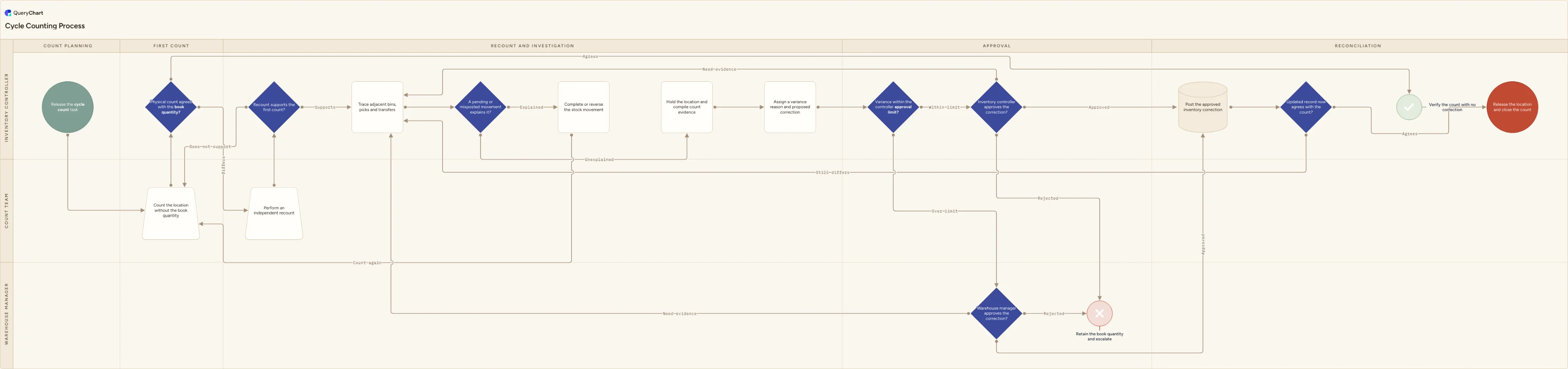
Cycle counting is a controlled check of selected locations during normal warehouse operations, not a shortcut for making the system balance. This template starts with a blind physical count, compares it with the book quantity, and sends every difference to an independent recount. When both counts support the same variance, the Inventory controller traces adjacent bins, picks, receipts and transfers before proposing any inventory correction. A pending or misposted movement is completed or reversed, then the location is counted again; it is not hidden under an adjustment. An unexplained variance is held with its count evidence and reason before it can reach approval.
The chart deliberately separates approval from counting. "Inventory controller approves the correction?" handles corrections within the local threshold, while "Warehouse manager approves the correction?" handles larger variances. Both can return the case for more evidence, and neither lets the count team post a correction itself. After approval, the controller posts the correction and verifies that the updated record agrees with the physical count before releasing the location. Adapt the lanes, thresholds, reason codes and hold rules to your WMS, stock risk and segregation-of-duties policy.
What this flowchart covers
In this template
- A blind physical count followed by the "Physical count agrees with the book quantity?" decision, so a system figure is not allowed to become the counter's answer
- An independent recount and a "Recount supports the first count?" loop that returns a conflicting result to the controlled count rather than selecting the more convenient quantity
- A movement investigation covering adjacent bins, picks and transfers, with "Complete or reverse the stock movement" returning to a recount before any correction is considered
- A held location, documented count evidence and stated variance reason before the proposed correction reaches either the controller or warehouse manager approval route
- A final "Updated record now agrees with the count?" verification before the chart releases the location and closes the count
When to use this template
- You run perpetual inventory and need a repeatable process for daily, weekly or ABC-class cycle counts without stopping the whole warehouse
- Counts are being adjusted immediately after one person reports a variance, and you need an independent recount and approval gate before the book balance changes
- Your team keeps finding late receipts, unconfirmed picks or open transfers after a correction has already been posted, and needs transaction investigation drawn into the process
- You need a clear handoff between count teams, inventory control and warehouse management for variance thresholds, evidence and location holds
How it works
Set the count population and cadence
Choose which locations or SKUs enter each cycle from your ABC policy, value, movement rate and risk. The chart begins when a task is released; your local rule should say how that task is selected and how long it may remain open.
Keep the first count blind
Remove the book quantity from the count task or otherwise prevent the counter seeing it. Record any picks, put-aways or transfers that cannot be paused, because the recount must compare stock at the same controlled point in time.
Name independent recount rules
Specify when a second person is required, whether they may see the first result, and how a disagreement is resolved. A recount that simply repeats the first number without control is not an independent check.
Define investigation evidence
List the movement history, adjacent locations, staging areas, count sheets and reason codes an investigator must review. Make correcting an open transaction the route back to a recount, rather than an alternative to it.
Set approval limits and release checks
Assign controller and manager thresholds, state who may approve a correction, and require the final system-to-physical verification before the location hold is removed. Review repeated reasons at the cadence your inventory policy requires.
Frequently asked questions
What is the difference between cycle counting and a full physical inventory?
Cycle counting checks a planned subset of stock locations or items on a recurring basis while operations continue. A full physical inventory attempts to count the entire population at one point in time, often with a broader operational freeze. Both need controlled counting and reconciliation, but cycle counts let a warehouse identify and investigate variances throughout the year instead of discovering them only at year end.
Should a cycle count variance be adjusted immediately?
No. A variance should first be confirmed by the count and, where your procedure requires it, an independent recount. The chart then checks for open or misposted movements, because a late receipt, transfer or pick should be corrected as a transaction rather than buried under an inventory adjustment. Only an evidenced, approved correction is posted.
Who should approve a cycle count correction?
The approver should be independent of the person who performed the count. This template uses an Inventory controller for corrections within a local limit and a Warehouse manager for larger variances, but the right thresholds and titles depend on your organization, stock value and control policy. The key control is approval before posting, supported by the recount and investigation evidence.
Where this process fits
In most operations this process hands off to Inventory Discrepancy Investigation.
Comes after
- Inventory Discrepancy Investigation — Inventory discrepancy investigation template for recounting, stock and order holds, movement tracing, manager approval before correction and verified release.