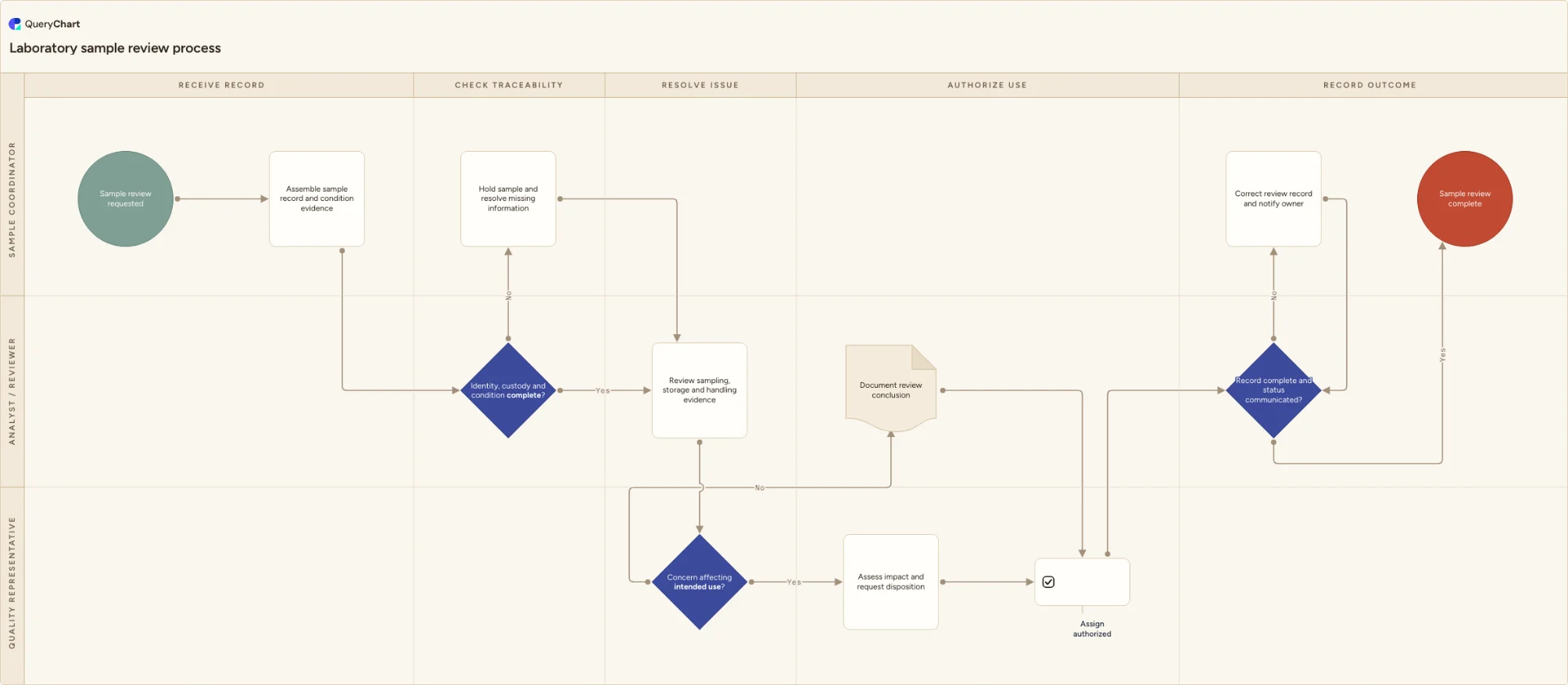
Laboratory sample review process flowchart
An editable laboratory sample review workflow for checking identity, custody, condition, storage and handling evidence, then assigning status or requesting an evidence-based disposition.
What the laboratory sample review process is
Sample review is more than checking that a container arrived. This workflow brings the identity, chain of custody, condition, storage and handling record together before a team assigns a status for the sample's intended use.
The exception route is deliberately visible. Missing information creates a hold-and-resolution step, while a concern about intended use goes to an impact assessment and disposition request rather than an informal decision at the bench.
Use the chart as an editable starting point. Align the roles, evidence sources, sample statuses and disposition authorities with the procedures and risks that apply in your laboratory.
What this flowchart covers
In this template
- A sample coordinator starts with the record and condition evidence needed for review.
- The identity, custody and condition decision separates complete samples from records that need clarification.
- A reviewer examines sampling, storage and handling evidence before an authorized status is assigned.
- Concerns about intended use flow to impact assessment, disposition and a communicated final status.
When to use this template
- You need a repeatable review before testing, transfer, retention or another intended use of a laboratory sample.
- Sample reception, analysts and quality staff need one view of who resolves missing custody or condition evidence.
- You are replacing a checklist-only handoff with an editable swimlane process that keeps held samples visible.
How it works
Name evidence sources
Replace the general record and condition evidence with the submission form, custody record, storage log, observations and systems your reviewers actually use.
Set status authority
Define who can assign each sample status, who requests a disposition and how the outcome is communicated to the people planning the work.
Test a held sample
Walk a recent sample with an incomplete record or handling concern through the hold and impact path. Adjust the chart where the real handoff differs.
Frequently asked questions
What does a laboratory sample review process flowchart cover?
It covers gathering the sample record and condition evidence, checking identity and custody, reviewing storage and handling, assessing a concern that could affect intended use, assigning status and completing the communicated record.
Is sample review the same as sample receipt?
Receipt focuses on accepting or recording a delivery. Review can occur at receipt or later and brings together the evidence needed to decide whether a sample supports a particular intended use, transfer or disposition.
What should happen when the sample record is incomplete?
Place the sample under the locally defined status, preserve the available evidence and assign an owner to resolve the gap. The appropriate disposition depends on the sample, intended work and local procedure.