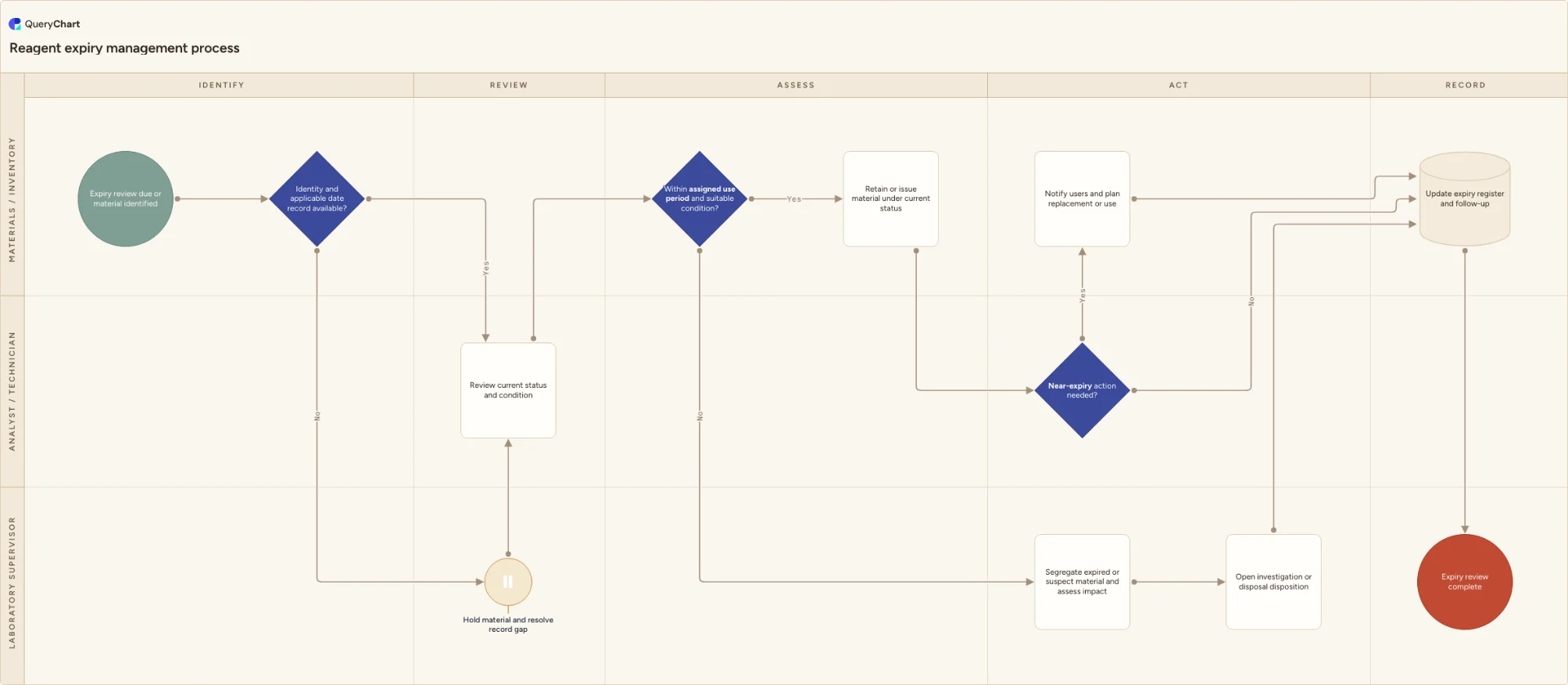
Reagent expiry management process flowchart
A reagent expiry management workflow for reviewing identity and date records, assessing current condition, managing near-expiry material, segregating unsuitable stock and recording follow-up.
What the reagent expiry management process is
A date on a container is only useful when it can be tied to the right material, its assigned use period and a current condition review. This chart starts by checking that the identity and date record are available; a gap holds the material for resolution instead of making the reviewer infer the status from a handwritten label alone.
Materials that remain suitable can still need action before their next use, such as informing users or planning replacement. Materials that are expired or suspect are segregated and routed to an impact assessment and local disposition decision. Add the site-defined dates, criteria, notification rules and record fields rather than assuming they are universal.
What this flowchart covers
In this template
- An opening record check that holds a material whose identity or applicable date cannot be confirmed.
- A combined use-period and condition decision before material is retained or issued.
- A near-expiry branch for user communication, replacement planning or another local action.
- A segregation and impact-assessment route for expired or suspect material, ending in an updated register.
When to use this template
- You perform scheduled expiry reviews or identify a material during use, storage or inventory work that may need a status decision.
- Different teams maintain labels, stock records and local storage areas, creating a risk that an expired or unclear item remains visible as routine stock.
- You want a process that handles near-expiry planning without implying one expiry period or disposition rule for every reagent.
How it works
Name the date sources
Identify the container label, preparation record, supplier information, system field or other controlled source that establishes each applicable date.
Set local review criteria
Add the condition observations, assigned use periods and review triggers used by the laboratory, keeping material-specific limits in the approved local procedure.
Plan the exception handoff
Specify who receives a near-expiry notice, who assesses suspect material and how impact review or disposition links to the inventory record.
Frequently asked questions
What does a reagent expiry management process flowchart cover?
It covers confirming identity and date records, reviewing condition and assigned use period, planning a near-expiry action, segregating expired or suspect stock and updating the expiry record.
Why check condition as well as a reagent date?
A date record and a material's observed condition answer different questions. Checking both detects a concern within an assigned period as well as a material whose date status requires action.
How should a laboratory manage near-expiry reagents?
Use a site-defined trigger to notify users or owners who need to plan replacement, prioritize a permitted use or take another approved action. No universal time period fits every material.
Where this process fits
In most operations this process follows Reagent preparation process flowchart and hands off to Reagent disposal process flowchart.
It is one step in Reagents and standards.
Step 5: Reagent preparation process flowchart
A reagent preparation workflow for confirming approved instructions and inputs, checking readiness, recording preparation, verifying the result, assigning status and investigating exceptions.
Step 6: Reagent expiry management process flowchart You are here
A reagent expiry management workflow for reviewing identity and date records, assessing current condition, managing near-expiry material, segregating unsuitable stock and recording follow-up.
Step 7: Reagent disposal process flowchart
A reagent disposal workflow for confirming identity and status records, segregating material, choosing an authorized route, correcting transfer discrepancies and recording final or pending disposition.