Reagent disposal process flowchart
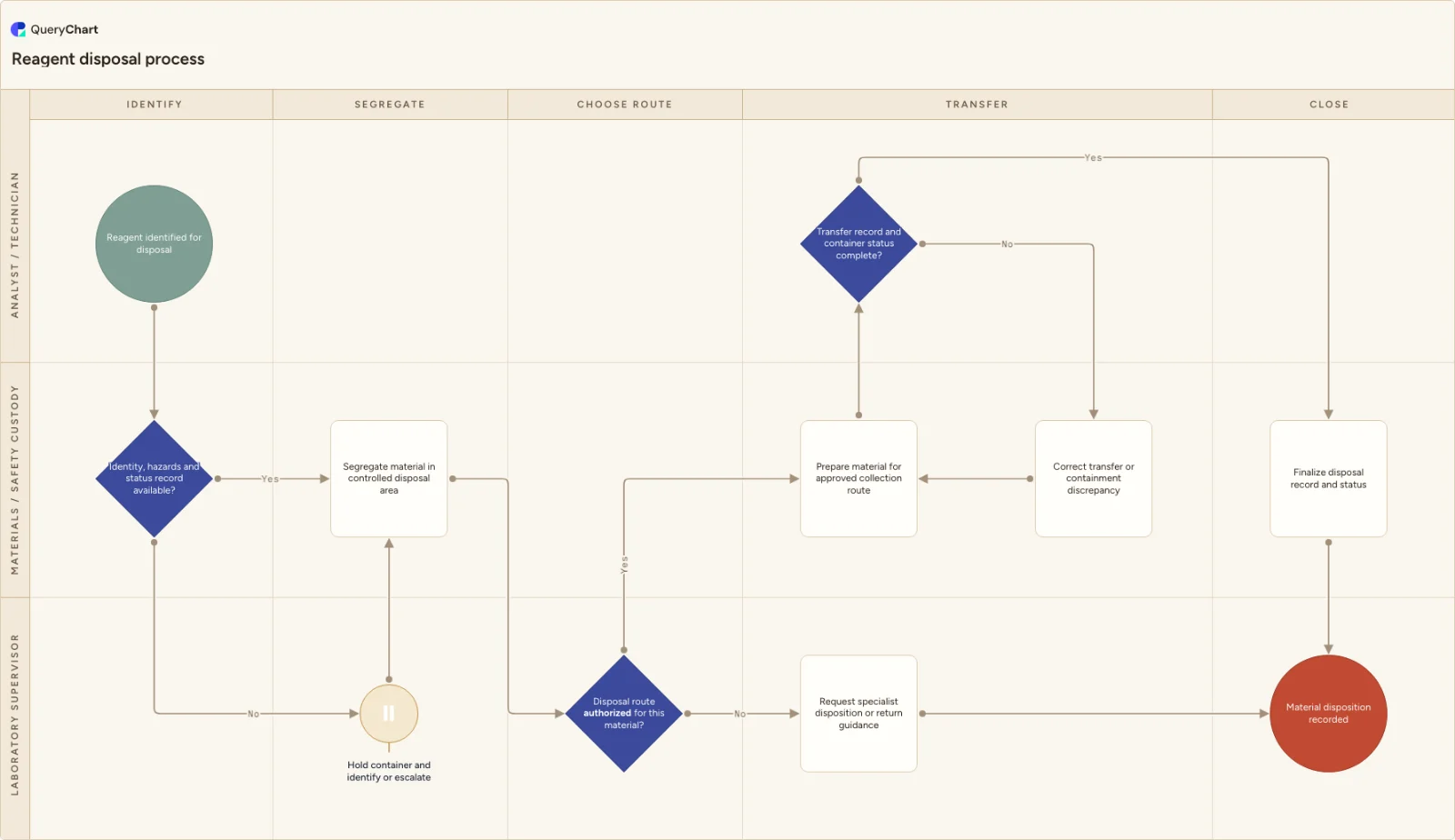
A reagent disposal workflow for confirming identity and status records, segregating material, choosing an authorized route, correcting transfer discrepancies and recording final or pending disposition.
What the reagent disposal process is
Disposal decisions become risky when the container identity, status or hazard information is uncertain. The template begins with those records and sends an unknown or unclear item to a controlled hold and escalation route before any disposal stream is chosen. That distinction matters because a label gap is not something a technician should solve by selecting the nearest collection container.
For identified material, the chart separates the authorization of a route from the physical transfer and its record. An incomplete transfer loops back for correction; a route that is not authorized creates a pending-disposition handoff instead of an improvised endpoint. Local safety procedures, training and disposal-provider instructions must supply the actual routes and controls.
What this flowchart covers
In this template
- An identity, hazard and status-record check before disposal activity begins.
- A controlled hold and escalation route for an unknown or incompletely identified container.
- A decision between an authorized collection route and specialist or return guidance for an unresolved route.
- A transfer-record verification loop that corrects containment or documentation discrepancies before closure.
When to use this template
- You need an editable handoff for expired, damaged, unwanted or otherwise restricted reagents awaiting disposition.
- Laboratory users need a visible response to an unknown container or a material that does not fit an available approved route.
- You are documenting where custody, supervisory decisions and final disposal records meet without writing a site-specific safety procedure into the chart.
How it works
Map approved local routes
Replace the general collection and specialist routes with the disposal pathways, providers and controls that your site has approved.
Protect unknown material
Define the hold location, status signal and escalation owner for containers with incomplete identity or hazard information.
Reconcile transfer evidence
Specify the custody, container-status and transfer records that must agree before closure, including the corrective handoff for a discrepancy.
Frequently asked questions
What does a reagent disposal process flowchart cover?
It covers confirming the material and records, controlling an unclear container, selecting an authorized disposition route, transferring material, reconciling the transfer record and recording final or pending disposition.
What should happen to an unknown reagent container?
Keep it under the local hold and containment controls, record what is known and escalate it to the role or service that can establish a safe disposition.
Why verify the disposal transfer record?
A physical handoff and its record can diverge through a missing entry, wrong status or incomplete custody information. Verification provides a point to correct that before closure.
Where this process fits
In most operations this process follows Reagent expiry management process flowchart and hands off to Laboratory waste management process flowchart.
It is one step in Reagents and standards.
Step 6: Reagent expiry management process flowchart
A reagent expiry management workflow for reviewing identity and date records, assessing current condition, managing near-expiry material, segregating unsuitable stock and recording follow-up.
Step 7: Reagent disposal process flowchart You are here
A reagent disposal workflow for confirming identity and status records, segregating material, choosing an authorized route, correcting transfer discrepancies and recording final or pending disposition.