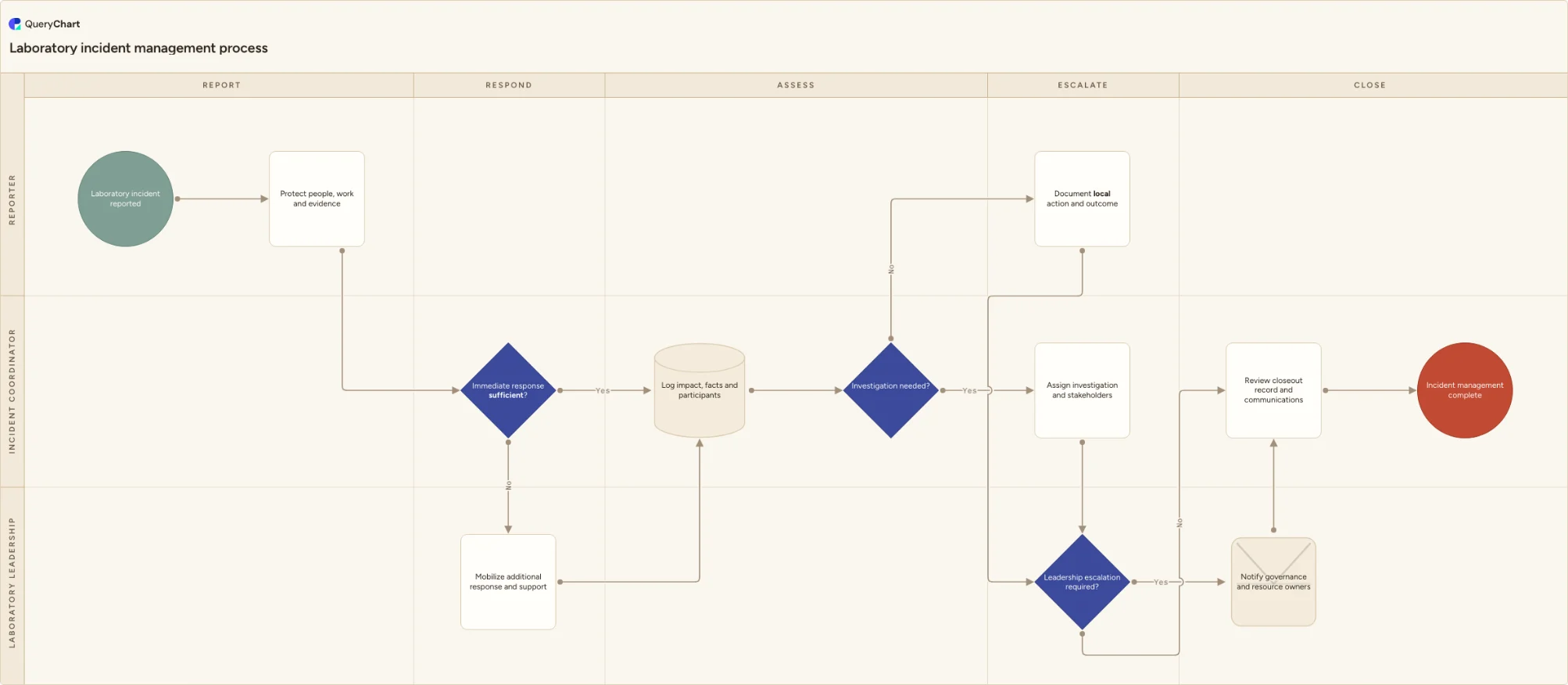
Laboratory incident management process flowchart
An editable laboratory incident management workflow for protecting people, work and evidence, assessing impact, routing investigations, escalating leadership decisions and recording closeout.
What the laboratory incident management process is
The first response to an incident should protect people, ongoing work and available evidence before a team tries to explain what happened. This template separates that immediate response from later impact logging and the decision about whether deeper investigation is needed.
A leadership escalation path remains available after the event has been assessed. That makes resource, governance or cross-functional decisions explicit while smaller incidents can still retain a documented local action and outcome.
Adapt incident types, emergency contacts, notification pathways and investigation criteria to local safety, quality and operational procedures. The template does not replace immediate emergency response instructions.
What this flowchart covers
In this template
- A reporter begins with protection of people, work and evidence rather than a technical conclusion.
- An insufficient immediate response routes to additional support before impact assessment.
- The incident coordinator distinguishes an investigation handoff from a documented local action.
- Leadership receives an explicit escalation route before closeout communications are reviewed.
When to use this template
- You need a laboratory workflow for incidents that may affect safety, operations, samples, data or equipment.
- Incident response currently stops after an initial notification without a clear owner for investigation or local action.
- You want leadership escalation to be based on an assessed situation rather than an informal chain of messages.
How it works
Map urgent response
Link the first two boxes to the emergency, safety and local control instructions that apply in your laboratory, including who can request additional support.
Define investigation routing
Describe the impact factors that direct an incident to a formal investigation, and name the record or system that receives the assignment.
Set escalation contacts
Replace the general leadership route with the governance, operations or specialist contacts that can make decisions for the incident types you manage.
Frequently asked questions
What does a laboratory incident management process cover?
It covers incident reporting, immediate protection, additional response if required, impact logging, investigation or local action routing, leadership escalation and reviewed closeout communications.
Is every laboratory incident a formal investigation?
No. The route should be determined using local criteria and the available facts. The template shows both an investigation path and a documented local-action path so the decision remains traceable.
Why keep leadership escalation separate from the initial response?
Immediate controls often need to happen before the full impact is understood. A later escalation decision lets the right leadership or governance group receive an assessed situation and a named next-step owner.
Where this process fits
In most operations this process hands off to Laboratory investigation process flowchart.
Comes after
- Laboratory investigation process flowchart — A laboratory investigation workflow for securing evidence, defining the event, assessing an assignable cause, determining data validity, impact assessment, corrective action and closure.