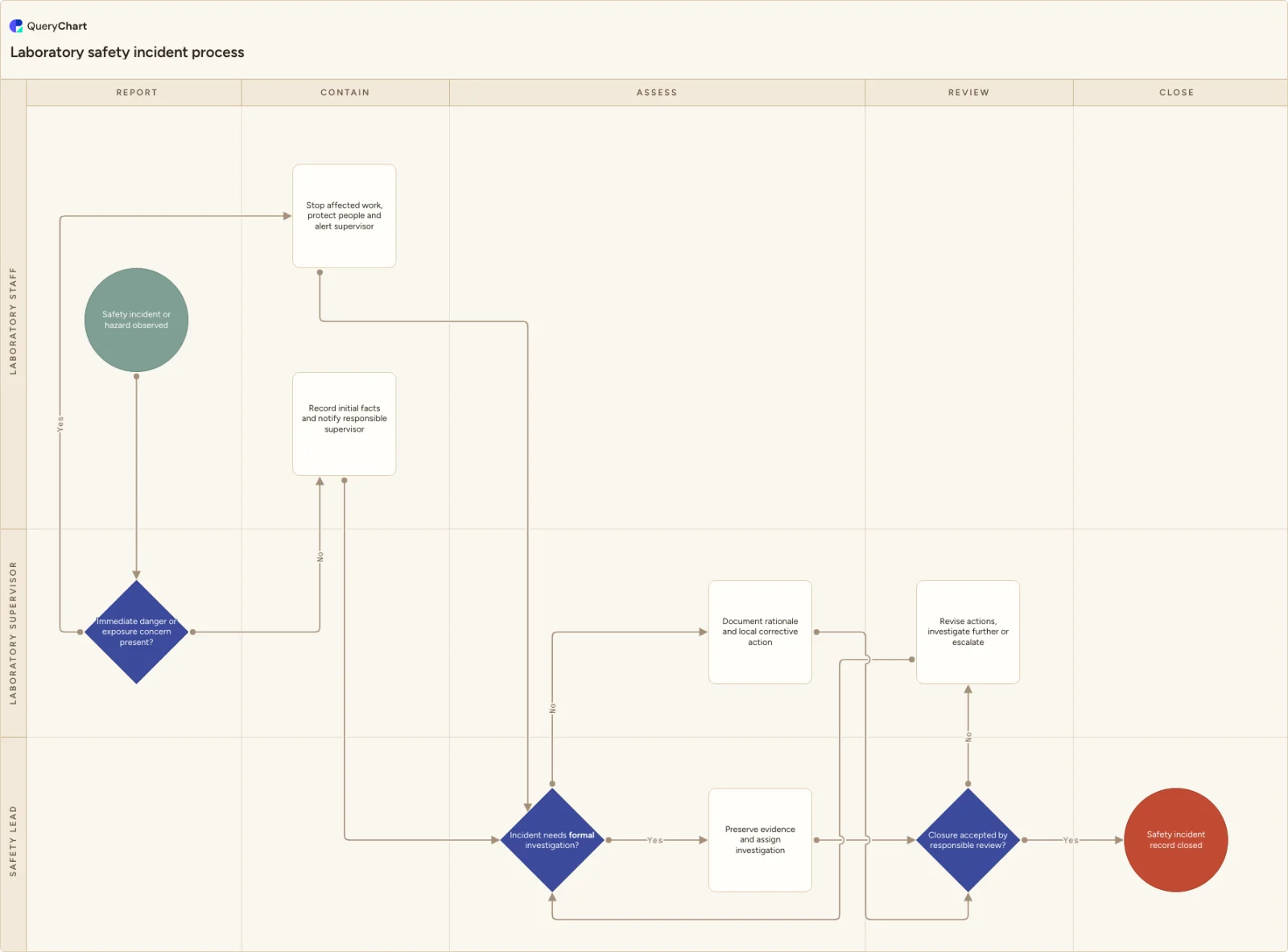
Laboratory safety incident process flowchart
A laboratory safety incident workflow for reporting observed hazards, addressing immediate concerns, preserving evidence, deciding investigation needs, documenting corrective actions and escalating unaccepted closure.
What the laboratory safety incident process is
This template separates an immediate danger or exposure concern from an incident that can first be documented and notified. Both routes lead to an investigation decision, then to a responsible closure review that can return work for further action.
Customize the local reporting channels, emergency contacts, investigation triggers and corrective-action process for your laboratory. It does not prescribe universal safety thresholds or claim regulatory compliance.
What this flowchart covers
In this template
- Initial reporting and immediate-concern response.
- Formal investigation or documented local correction.
- Responsible closure review with a further-action and escalation route.
When to use this template
- Laboratory staff need a shared incident-reporting and follow-up flow.
- You are documenting the handoff between laboratory supervision and safety review.
- An incident procedure needs its investigation and closure exceptions made visible.
How it works
Map reporting channels
Replace generic notification steps with the actual local channels and responsible roles.
Define investigation decisions
Set the evidence and local criteria used to decide when a formal investigation is needed.
Connect corrective action
Link corrective actions and unresolved closures to the procedures your laboratory uses.
Frequently asked questions
What does a laboratory safety incident process cover?
It covers report intake, response to immediate concerns, investigation decisions, corrective follow-up and accountable closure.
Does the chart define an emergency threshold?
No. Local emergency, reporting and escalation rules must be defined by the laboratory's own approved arrangements.
Why can closure be rejected?
A rejection returns the case for more action, evidence, investigation or escalation instead of leaving the record incomplete.
Where this process fits
In most operations this process follows Laboratory spill response process flowchart.
Comes before
- Laboratory spill response process flowchart — A laboratory spill response workflow for clarifying the material and area status, selecting the applicable site procedure, managing local response or emergency escalation, reviewing follow-up and closing the record.
- Laboratory emergency response process flowchart — A laboratory emergency response workflow for clarifying the situation and local role, activating applicable site arrangements, coordinating support, documenting recovery actions and escalating an unaccepted post-event review.