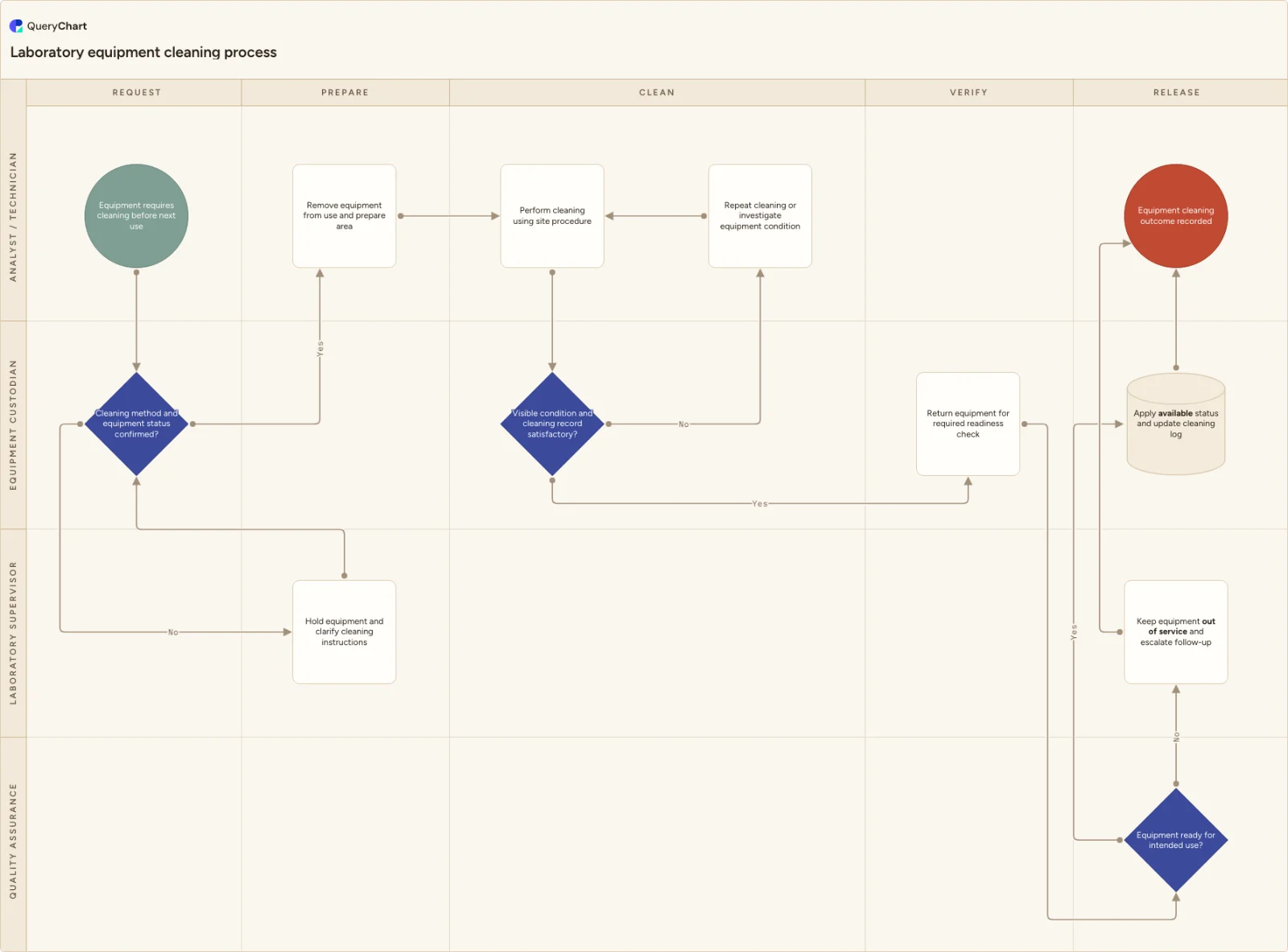
Laboratory equipment cleaning process flowchart
A laboratory equipment cleaning workflow for confirming method and status, preparing equipment, performing cleaning, checking condition and records, rework, readiness review and log updates.
What the laboratory equipment cleaning process is
The template starts by confirming that the chosen cleaning method belongs to the equipment and its current condition. It then keeps the asset out of routine use while the area is prepared and the cleaning activity is performed, rather than treating an unlabeled bench task as a release.
Two checks make the exception route practical: a condition-and-record review can send the work back for cleaning or investigation, and a separate readiness decision can keep equipment out of service when another required check is unresolved. Adapt the methods, records, hazards and release roles to your site.
What this flowchart covers
In this template
- Five stages from a cleaning request through a recorded available or restricted status.
- A method-and-status confirmation before equipment is prepared for cleaning.
- A rework route for an unsatisfactory visible condition or incomplete cleaning record.
- A separate readiness decision for intended use after cleaning is complete.
- Editable lanes for users, equipment custody, supervision and quality review.
When to use this template
- You need a repeatable map for cleaning laboratory equipment between activities, after maintenance or before a defined next use.
- Teams need to distinguish cleaning completion from any further readiness, verification or status decision.
- You are documenting how unclear instructions, failed inspection or a condition concern should be held and escalated.
How it works
Define cleaning-method ownership
Link the method decision to the equipment type, current condition and instructions your laboratory approves. Add the record or label that tells a user which method applies before work begins.
Make rework observable
Describe what the reviewer observes, who repeats cleaning and when an unexpected condition becomes an investigation or maintenance handoff. Avoid a generic pass or fail label that does not tell the next person what to do.
Separate cleaning from release
State which additional readiness checks, status updates and authorizations apply before the equipment can be used. Keep those decisions site-specific, particularly where cleaning follows repair, a spill or an unusual event.
Frequently asked questions
What does a laboratory equipment cleaning process flowchart cover?
It maps method confirmation, removal from use, preparation, cleaning, condition and record review, repeat-cleaning or investigation, readiness review and the final status-log update. The workflow keeps a cleaning task connected to the decision about what may happen next with the asset.
Why check the cleaning record as well as visible condition?
A clean-looking item and an incomplete record describe different uncertainties. Reviewing both gives the laboratory a way to identify missing evidence, an unclear method or a condition concern before the equipment is treated as ready for another activity.
What should happen if equipment is not ready after cleaning?
Keep it out of service under the local status control, record the reason and route the issue to the person who can decide on repeat cleaning, inspection, maintenance or another follow-up. The next action depends on the equipment and event, so the template does not prescribe one universal response.
Where this process fits
In most operations this process follows Equipment use log process flowchart and hands off to Laboratory equipment maintenance process flowchart.
It is one step in Laboratory equipment.
Step 4: Equipment use log process flowchart
An equipment use log workflow for confirming asset status and user authorization, recording planned activity and observations, escalating events, reconciling missing details and updating history.
Step 5: Laboratory equipment cleaning process flowchart You are here
A laboratory equipment cleaning workflow for confirming method and status, preparing equipment, performing cleaning, checking condition and records, rework, readiness review and log updates.
Step 6: Laboratory equipment maintenance process flowchart
A laboratory equipment maintenance workflow for scheduling service, managing availability, confirming instructions and parts, completing work, functional checks, escalation and maintenance records.