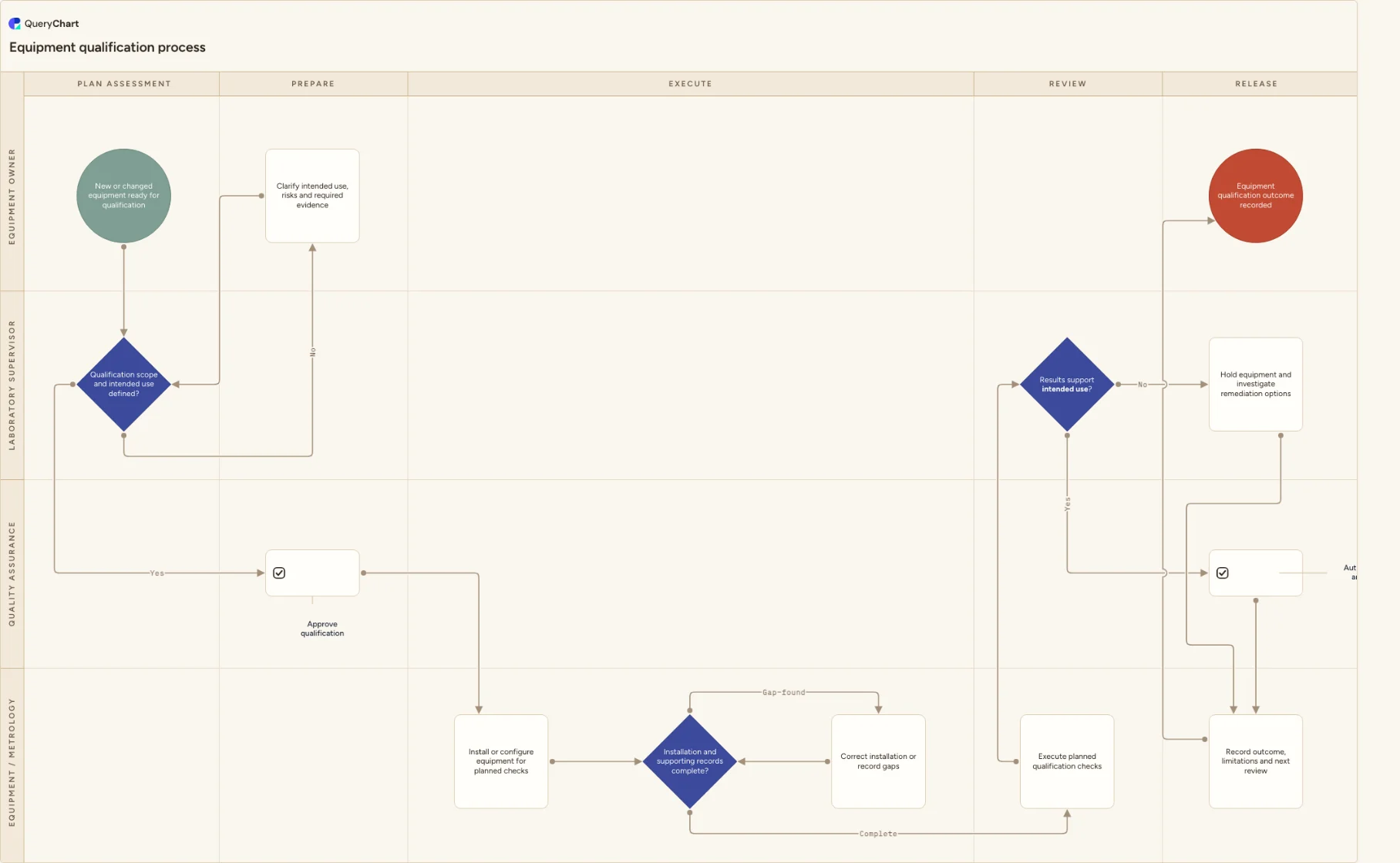
Equipment qualification process flowchart
An equipment qualification workflow for defining intended use, planning evidence, checking installation, executing qualification, resolving gaps, authorizing status and recording limitations.
What the equipment qualification process is
This template begins before any checks are run by asking the laboratory to define intended use, scope and the evidence it needs. It then separates installation and record readiness from the planned qualification work, making it clear where a gap must be corrected rather than worked around.
The final decision is deliberately broader than a single test result. If results do not support intended use, the equipment remains on a remediation path and the outcome can record limitations or a different disposition. Adapt the plan, roles, evidence and decision criteria to the equipment and risks at your site.
What this flowchart covers
In this template
- Five stages from defining qualification scope through a recorded release or remediation outcome.
- A clarification loop when intended use, risks or required evidence are not yet defined.
- An installation-and-record readiness gate before planned qualification checks begin.
- A distinct route for results that do not support intended use, rather than an assumed release.
- Editable swimlanes for equipment ownership, technical work, laboratory supervision and quality review.
When to use this template
- You are introducing, relocating, materially changing or repurposing laboratory equipment and need to define the readiness decision.
- A team needs one visual handoff between equipment owners, technical specialists, laboratory management and quality review.
- You are drafting a qualification procedure that must show how incomplete evidence or unsupported results are handled.
How it works
Define intended use before testing
Replace the general intended-use decision with the work, configuration and operating context your laboratory expects from the equipment. Name the source that approves those expectations before the plan is issued.
List the evidence that matters
Add the installation records, supplier information, checks and review records your team actually relies on. Keep the evidence proportional to the equipment and do not imply that one checklist fits every asset.
Make the unsupported-result route usable
Specify who can hold the equipment, decide on remediation and document a limitation or alternate disposition. Test that route with a recent difficult qualification rather than only the successful path.
Frequently asked questions
What does an equipment qualification process flowchart cover?
It maps the decision from intended use and qualification planning through installation readiness, planned checks, technical and quality review, then either authorized status or a held remediation outcome. The chart keeps evidence gaps and unsupported results visible instead of treating qualification as a one-way test sequence.
Why define intended use before qualification checks?
The intended use determines what evidence and checks are meaningful. Recording it first helps a team distinguish a useful qualification plan from a generic list of activities, especially when equipment is configured for a particular method, location or workload.
What should happen if qualification results do not support intended use?
Keep the equipment in the controlled status your site defines, investigate the gap and decide whether remediation, changed use, further evidence or another disposition is appropriate. Record the decision and any limitation rather than relabeling the asset without a traceable basis.
Where this process fits
In most operations this process hands off to Laboratory equipment inventory process flowchart.
It is one step in Laboratory equipment.
Step 1: Equipment qualification process flowchart You are here
An equipment qualification workflow for defining intended use, planning evidence, checking installation, executing qualification, resolving gaps, authorizing status and recording limitations.
Step 2: Laboratory equipment inventory process flowchart
A laboratory equipment inventory workflow for defining count scope, locating assets, comparing identifiers and status, investigating discrepancies, authorizing changes and updating the equipment register.