thyssenkrupp Organizational Structure & Org Chart
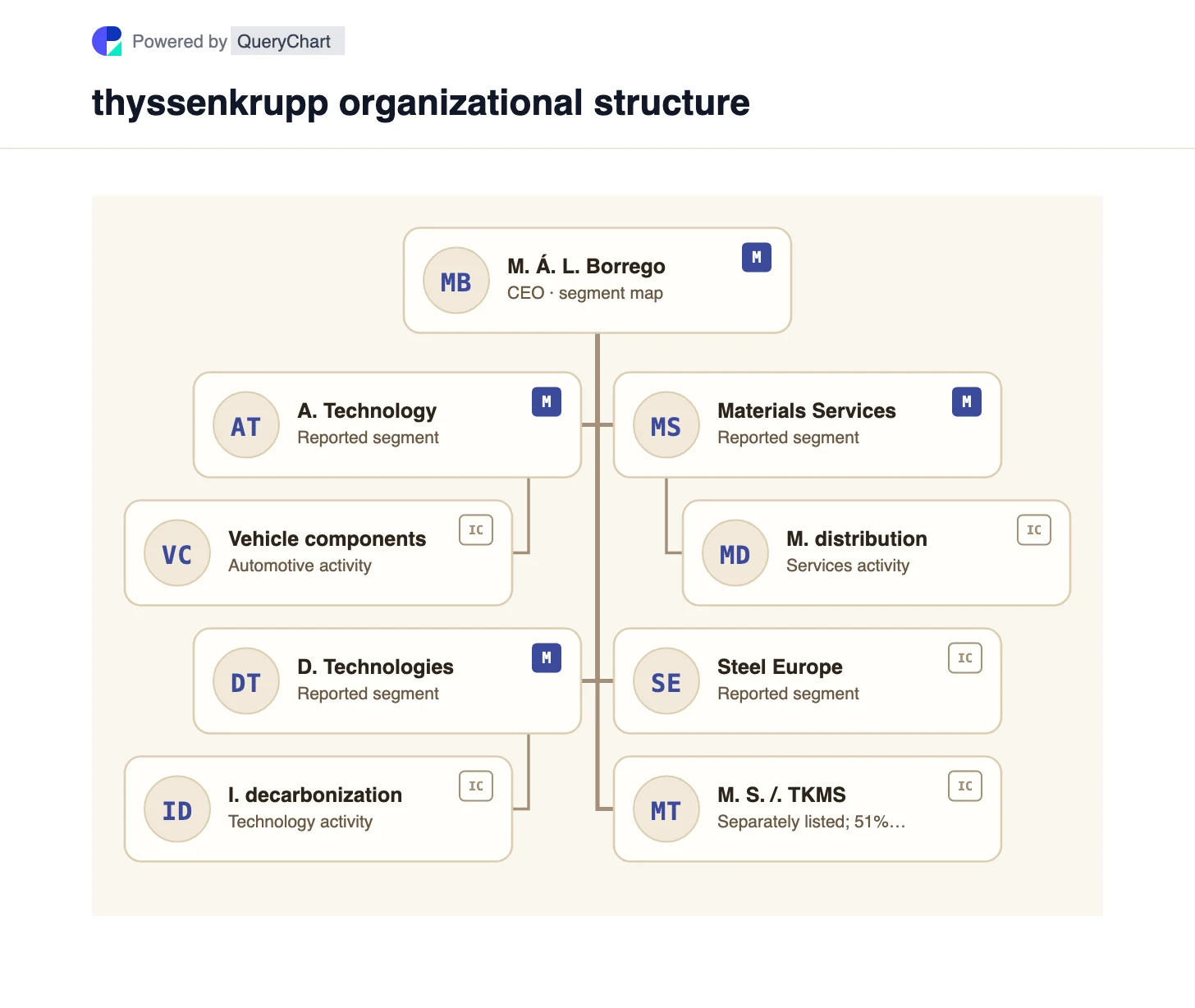
thyssenkrupp describes five businesses: Automotive Technology, Decarbon Technologies, Materials Services, Steel Europe and Marine Systems. Its structure has changed as the group reshapes its portfolio.
thyssenkrupp organizational chart
Duplicate and edit this thyssenkrupp chart
thyssenkrupp's reporting structure as of 2026-09. Drag to pan, scroll to zoom — or open it in QueryChart and edit it as your own.
- Industry
- Industrial technology and materials
- Headquarters
- Essen, Germany
- Founded
- 1999 (Krupp–Thyssen merger)
- Employees
- More than 93,000 (FY2024/25)
- CEO
- Miguel Ángel López Borrego
- Revenue
- €32.8 billion (FY2024/25)
- Ownership
- Public
- Structure as of
- 2026-09
- Structure last reviewed
- 2026-09-24
About the company
thyssenkrupp describes five businesses: Automotive Technology, Decarbon Technologies, Materials Services, Steel Europe and Marine Systems. Its structure has changed as the group reshapes its portfolio.
TKMS, formerly within Marine Systems, became separately listed in October 2025, with thyssenkrupp retaining a 51 percent interest. The diagram keeps that listing visible and does not present TKMS as an ordinary internal department.
How thyssenkrupp is organized
Automotive Technology supplies vehicle components and systems, while Decarbon Technologies houses industrial technologies for lower-emission processes. Materials Services distributes and processes materials.
Steel Europe remains the steel business. Marine Systems is represented by the separately listed TKMS relationship, which has a different legal and shareholder status from the wholly integrated businesses.
The five labels follow thyssenkrupp’s public segment taxonomy. Announced portfolio separations are not drawn as completed transactions until they take legal effect.
Key leadership roles
Miguel Ángel López Borrego
Chief executive, thyssenkrupp — The chart depicts business-segment membership, not unreported personal reporting lines.
How this structure supports the business
The chart shows why steel, materials distribution and marine systems cannot be understood as one industrial product line.
The TKMS label warns readers that an operating-segment relationship and a 51 percent listed-company interest are different facts.
Advantages and disadvantages
- The business-segment membership view follows the company's public disclosure.
- A tree cannot show every cross-company function, joint venture or legal entity.
Interesting facts
- The group reported five segments for FY2024/25.
- TKMS became separately listed on 20 October 2025.
- thyssenkrupp stated it retained 51 percent of TKMS.
- The 2025 group included 320 consolidated companies.
Related organization charts
- KION Group Organizational Structure & Org Chart
- GEA Group Organizational Structure & Org Chart
- Bosch Organizational Structure & Ownership Chart
- Siemens Organizational Structure
- BASF Organizational Structure & Business Segments
- Volkswagen Group Organizational Structure & Org Chart
- Bayer Organizational Structure & Divisions
- Rheinmetall Organizational Structure & Divisions Chart
Frequently asked questions
What are thyssenkrupp's main businesses?
Automotive Technology, Decarbon Technologies, Materials Services, Steel Europe, Marine Systems / TKMS.
What relationship does this thyssenkrupp chart show?
It shows business-segment membership from the cited company disclosures, with selected activities placed below their published groupings.
Is this a complete legal or employee reporting chart?
No. The diagram stops at the last public level verified in the cited sources.
Use this org chart template
Open the dated structure in QueryChart and adapt its divisions, brands and connections to your own organization.