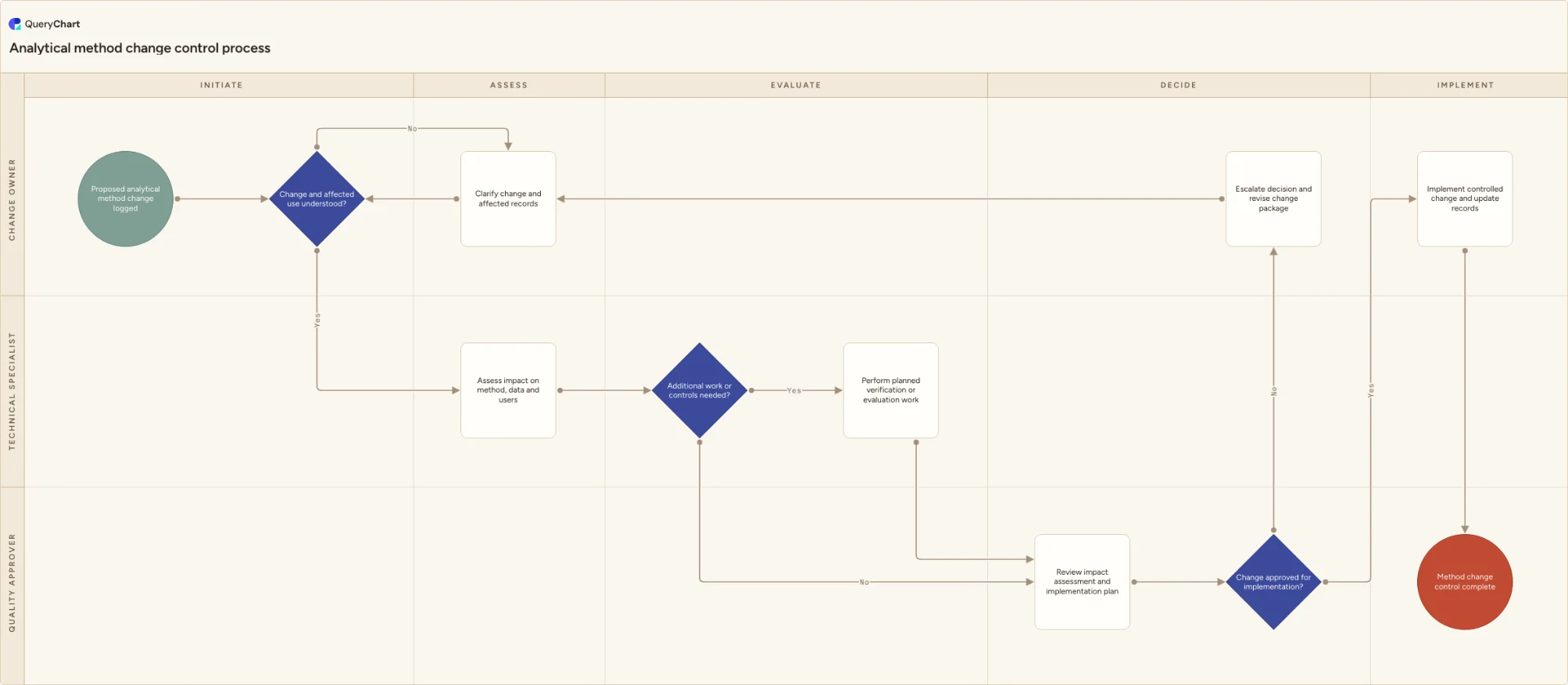
Analytical method change control process flowchart
An analytical method change control process chart for clarifying changes, assessing method and data impact, completing needed work, resolving approval concerns and implementing a controlled update.
What the analytical method change control process is
A method change can alter instructions, equipment, calculations, reporting or the evidence needed to support a result. The chart begins with a clear description of the proposed change and affected use so the assessment is based on the actual change rather than its short title in a request system.
The decision about additional work does not prescribe one response for every change. It makes space for the laboratory to define the verification, evaluation, communication or other controls that its own procedure requires, then sends an unresolved approval concern back to a revised change package.
What this flowchart covers
In this template
- Change Owner, Technical Specialist and Quality Approver lanes separate request ownership, technical assessment and approval.
- Change and affected use understood? returns an unclear request for clarification before impact is assessed.
- Additional work or controls needed? creates an explicit branch for the work identified by the laboratory's assessment.
- The approval branch either implements a controlled update or routes open concerns back to a revised package.
When to use this template
- You need to document how a laboratory reviews changes to a method, its instructions, supporting tools or associated records.
- Technical teams make updates but quality reviewers cannot see how impact, follow-up work and release decisions connect.
- A proposed change may be returned, expanded or escalated before it is appropriate to implement.
How it works
Describe the change precisely
Replace the opening label or notes with what is changing, why it is proposed, which method version is affected and which uses or records may be impacted. Avoid relying on a ticket title alone.
Build the local assessment
List the impacts your procedure requires the team to consider, such as instructions, data processing, training, reports or connected methods. Add the evidence location and accountable technical reviewer.
Define the added-work decision
Set the site-specific factors that decide whether a change needs further work or controls. The chart deliberately leaves that decision open because a universal threshold would be misleading.
Link implementation to records
Name the controlled method, change record, training notice and other outputs that must be updated after approval. Keep a clear route for rejected or unresolved changes to return for revision.
Frequently asked questions
What should analytical method change control cover?
It should show how the change is described, how its method and data impact is assessed, what follow-up work is selected, who reviews the package, and how approved updates reach the controlled method and associated records.
Does every method change need the same follow-up work?
No. The template uses a decision point so the laboratory can apply its own procedure and risk assessment to the proposed change. It is intentionally not a source of universal verification, validation or acceptance requirements.
Why does a rejected change return to clarification?
A rejection may reveal an unclear scope, missing impact information or an incomplete implementation plan. Routing it to a revised package preserves the decision and gives the owner a defined way to address the concern before resubmission.
Where this process fits
In most operations this process follows Method transfer process flowchart.
It is one step in Analytical method lifecycle.
Step 5: Method transfer process flowchart
A method transfer workflow using sending laboratory, receiving laboratory, method owner and quality roles for protocol preparation, readiness, comparative testing, deviations, approval and implementation.
Step 6: Analytical method change control process flowchart You are here
An analytical method change control process chart for clarifying changes, assessing method and data impact, completing needed work, resolving approval concerns and implementing a controlled update.