Hapag-Lloyd Organizational Structure & Org Chart
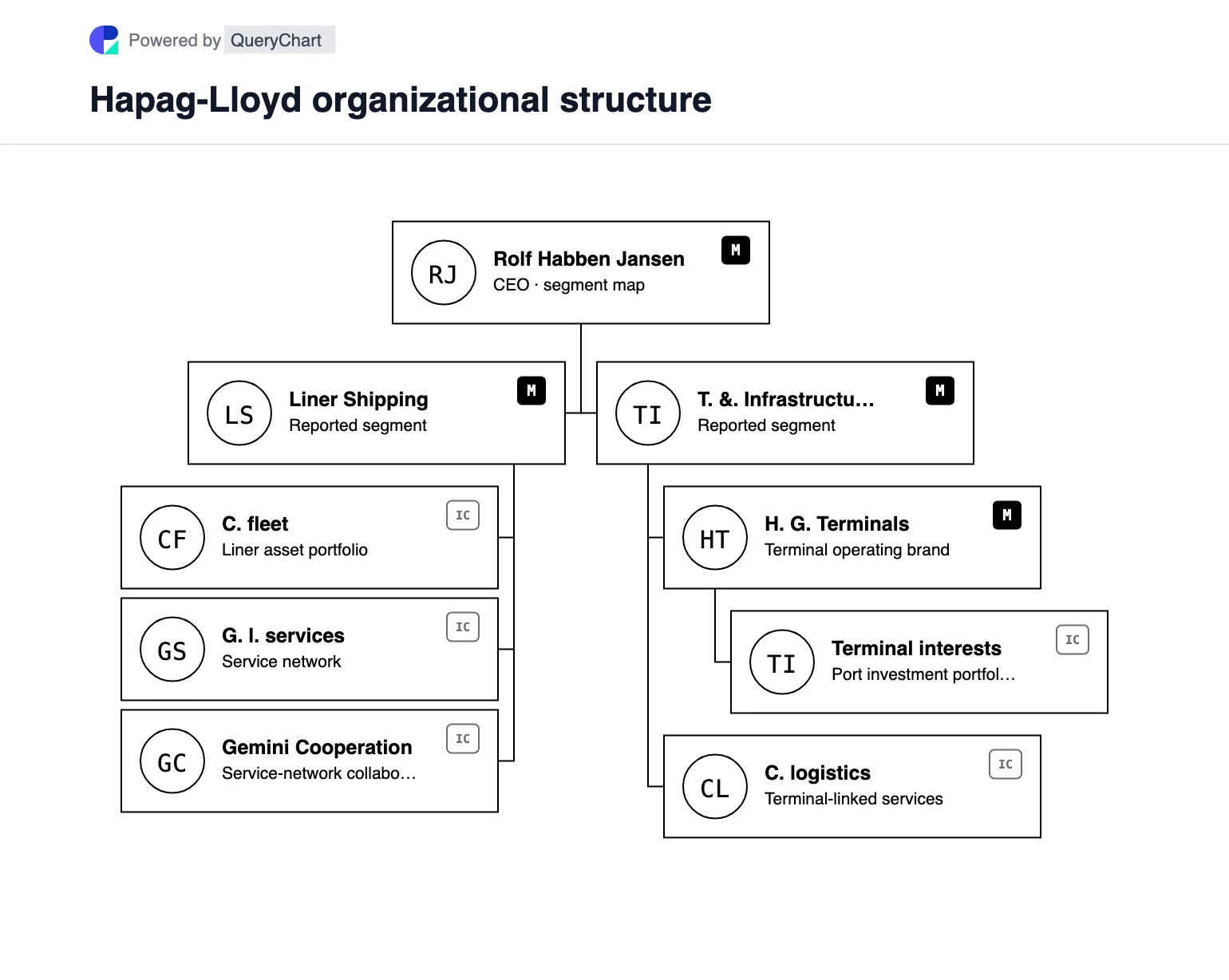
Hapag-Lloyd operates container shipping services and has a separate terminal investment and infrastructure business. Its annual report presents these as two reporting segments.
Hapag-Lloyd organizational chart
Duplicate and edit this Hapag-Lloyd chart
Hapag-Lloyd's reporting structure as of 2026-09. Drag to pan, scroll to zoom — or open it in QueryChart and edit it as your own.
- Industry
- Container shipping and terminals
- Headquarters
- Hamburg, Germany
- Founded
- 1970 (merger)
- Employees
- 18,117 (31 Dec 2025)
- CEO
- Rolf Habben Jansen
- Revenue
- €18.6 billion (FY2025)
- Ownership
- Public
- Structure as of
- 2026-09
- Structure last reviewed
- 2026-09-24
About the company
Hapag-Lloyd operates container shipping services and has a separate terminal investment and infrastructure business. Its annual report presents these as two reporting segments.
The diagram separates vessel-and-service operations from terminal stakes. Hanseatic Global Terminals is the terminal brand; a terminal interest does not always mean full ownership of the local port facility.
How Hapag-Lloyd is organized
Liner Shipping runs the global container-vessel fleet and network of liner services. The Gemini network is an operating collaboration and service network rather than a wholly owned subsidiary.
Terminal & Infrastructure invests in terminals and complementary logistics activities under Hanseatic Global Terminals.
The group had interests in 21 container terminals at year-end 2025, with the Damietta facility commencing commercial operations in February 2026. Its public segment view does not list every terminal as a legal subsidiary.
Key leadership roles
Rolf Habben Jansen
Chief executive, Hapag-Lloyd — The chart depicts reported segment and operating-brand membership, not unreported personal reporting lines.
How this structure supports the business
The visual shows why terminal infrastructure has its own economics beside vessel shipping.
It distinguishes network partnerships from ownership of an operating company.
Advantages and disadvantages
- The reported segment and operating-brand membership view follows the company's public disclosure.
- A tree cannot show every cross-company function, joint venture or legal entity.
Interesting facts
- Hapag-Lloyd reports two segments.
- Hanseatic Global Terminals is its terminal brand.
- The group had interests in 21 terminals at year-end 2025.
- Damietta started commercial operation in February 2026.
Related organization charts
- DHL Group Organizational Structure & Divisions
- Deutsche Bahn Organizational Structure & Org Chart
- Lufthansa Group Organizational Structure & Airlines
- Fraport Organizational Structure & Org Chart
- HHLA Organizational Structure & Org Chart
- SIXT Organizational Structure & Org Chart
- TUI Group Organizational Structure & Org Chart
Frequently asked questions
What are Hapag-Lloyd's main businesses?
Liner Shipping, Terminal & Infrastructure.
What relationship does this Hapag-Lloyd chart show?
It shows reported segment and operating-brand membership from the cited company disclosures, with selected activities placed below their published groupings.
Is this a complete legal or employee reporting chart?
No. The diagram stops at the last public level verified in the cited sources.
Use this org chart template
Open the dated structure in QueryChart and adapt its divisions, brands and connections to your own organization.