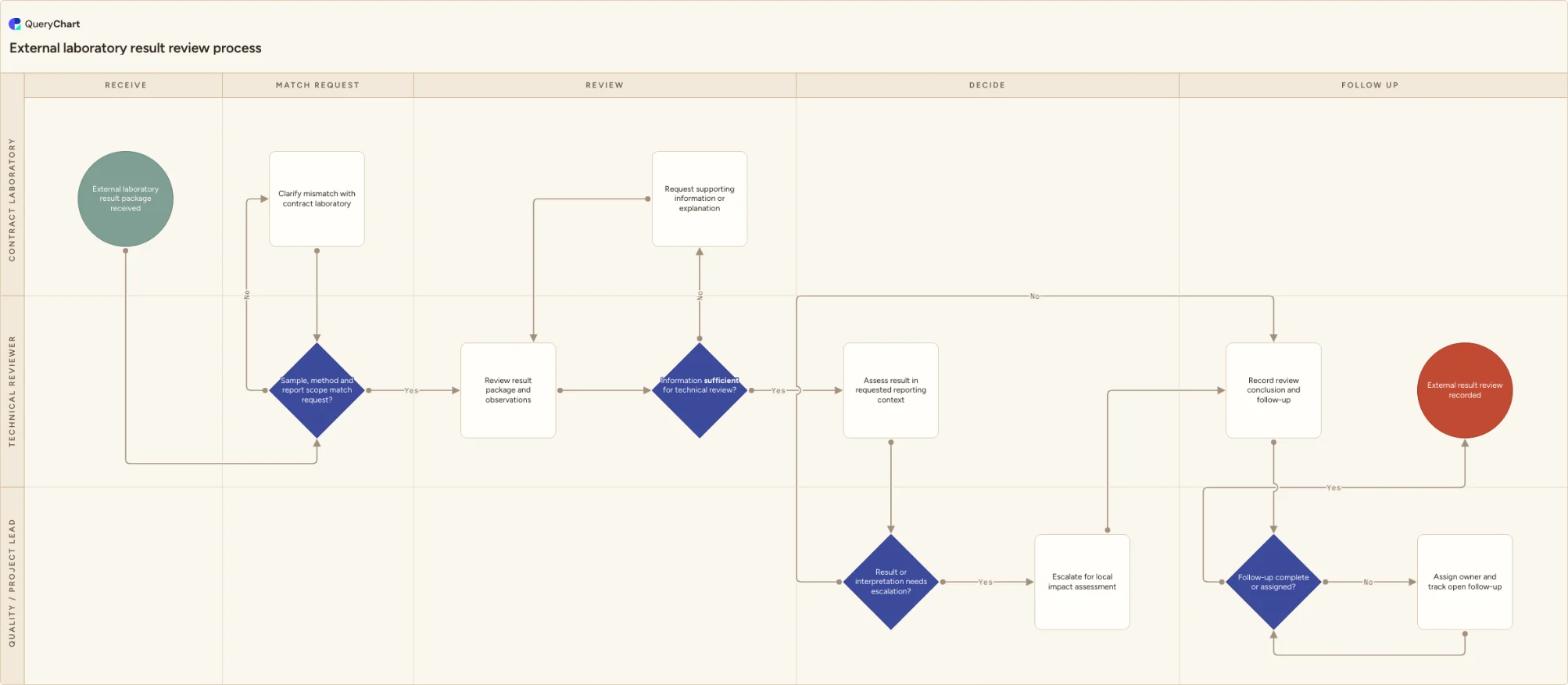
External laboratory result review process flowchart
An editable external laboratory result review workflow for checking report scope, obtaining missing context, assessing results, escalating concerns and recording follow-up ownership.
What the external laboratory result review process is
The process first checks whether the received package matches the requested sample, method and reporting scope. A mismatch returns for clarification before technical interpretation begins, preserving the distinction between a document being present and a result being relevant to the request.
Technical sufficiency and impact escalation are separate decisions. A reviewer can request context from the contract laboratory, and a result that needs a broader local decision can be routed to the owner who assesses impact instead of being resolved by the report reviewer alone.
Adapt the review evidence, interpretation rules, acceptance authority and escalation route to the product, method and local quality system. This template does not define universal report acceptance criteria or treat external results as interchangeable with local procedures.
What this flowchart covers
In this template
- Checking the sample, method and report scope against the original external testing request.
- A route to request missing explanation, references or supporting information before technical review continues.
- Separating technical review from any wider impact or business decision that the result may require.
- Recording a conclusion and named follow-up rather than closing the review when actions remain open.
When to use this template
- You receive reports from a contract laboratory that need a documented internal review before a related decision is made.
- Technical reviewers need a consistent way to query incomplete or mismatched result packages.
- Quality, project or product owners need visibility when an external result requires more than a routine review.
How it works
Name the local review context
Connect the scope, method, sample identity, reporting purpose and decision owner to the records your team already uses. A report should be reviewed against the request it is meant to answer.
Separate queries from conclusions
Specify how a reviewer asks for context, correction or further information, and keep that route distinct from the local decision about the result's significance.
Define escalation ownership
Replace the general escalation step with the quality, technical, product or customer owner who can assess the relevant impact. Do not make the reviewer the default decision maker for every concern.
Frequently asked questions
What does an external laboratory result review process flowchart cover?
It maps receipt of an external result package through request matching, technical sufficiency review, clarification, impact escalation where needed, a documented conclusion and assigned follow-up.
Why compare the report with the original request?
A report can be complete in its own terms yet concern a different sample, method version, reporting basis or request scope. Comparing it with the original request gives the reviewer a clear point to detect and resolve that mismatch.
Does a reviewed external result automatically determine the next decision?
No. The appropriate interpretation and next action depend on the local purpose of the testing, the records available and the authority assigned to that decision. The template keeps the review and any broader impact decision connected but distinct.
Where this process fits
In most operations this process follows Sample transfer to contract laboratory process flowchart and hands off to Contract laboratory performance review process flowchart.
It is one step in Outsourced testing.
Step 3: Sample transfer to contract laboratory process flowchart
An editable sample transfer workflow for planning an external laboratory handoff, preparing identifiers and records, confirming receipt, resolving issues and tracking follow-up.
Step 4: External laboratory result review process flowchart You are here
An editable external laboratory result review workflow for checking report scope, obtaining missing context, assessing results, escalating concerns and recording follow-up ownership.
Step 5: Contract laboratory performance review process flowchart
An editable contract laboratory performance review workflow for collecting service evidence, resolving gaps, assessing concerns, planning action and recording the next review trigger.