External laboratory deviation process flowchart
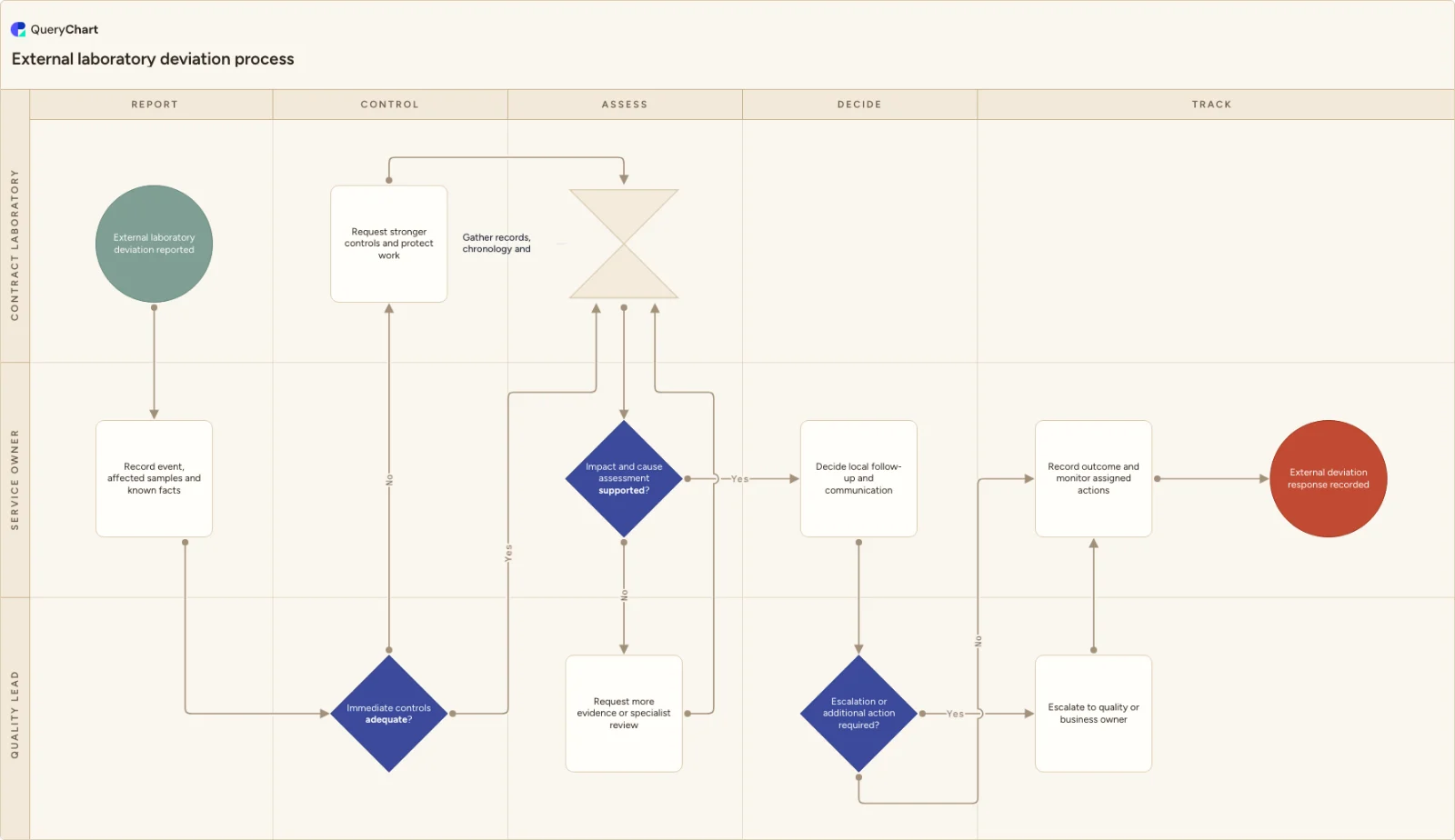
An editable external laboratory deviation workflow for recording the event, checking immediate controls, requesting evidence, assessing impact, escalating actions and tracking closure.
What the external laboratory deviation process is
The workflow captures the reported event, affected samples and initial facts, then asks whether immediate controls are sufficient. Where they are not, the sponsoring team requests stronger protection and keeps affected work visible while the response develops.
Evidence gathering and impact assessment are separate from the contract laboratory's own internal investigation. An unsupported assessment returns for further records or specialist input; a concern that needs wider authority follows an explicit escalation path rather than being closed through correspondence alone.
Adapt notification, containment, evidence, impact and closure decisions to the service agreement and local quality system. The chart does not prescribe a universal deviation classification, investigation outcome or acceptance decision.
What this flowchart covers
In this template
- Recording an external laboratory event with the affected work and facts known at the time of notification.
- A route to strengthen controls before relying on later investigation information.
- Requesting further evidence or specialist review when the cause or impact assessment is not yet supported.
- Escalating and tracking local follow-up while retaining the distinction between both organisations' responsibilities.
When to use this template
- A contract laboratory reports an event that may affect samples, data, timing or another agreed service interface.
- You need an internal response that connects to, but does not replace, the external laboratory's own investigation.
- Quality, technical and service owners need a documented route for evidence, impact and follow-up ownership.
How it works
Define notification and control handoffs
Name the contacts, records and immediate safeguards used when an external event is reported. Show what the sponsoring organisation must protect while information is still incomplete.
Separate external and internal responsibilities
Link the external laboratory's response record to the local impact and decision process, but do not collapse them into one owner. Each organisation may need to assess different consequences.
Set local escalation and closure routes
Add the local people who can decide on impact, communications and follow-up, and state how unresolved actions remain visible after the external laboratory responds.
Frequently asked questions
What does an external laboratory deviation process flowchart cover?
It covers receiving an external event notification, applying or requesting immediate controls, gathering evidence, assessing whether the available explanation and impact are supported, escalating where needed and tracking assigned actions to a recorded outcome.
Does the contract laboratory's investigation close the sponsoring organisation's response?
Not automatically. Its investigation can be important evidence, but the sponsoring organisation may still need to assess affected work, local decisions, communications and follow-up within its own responsibilities.
What should trigger escalation of an external laboratory deviation?
Use the impact, uncertainty, scope, customer commitments, sample status and authority questions that apply to your organisation. The template gives escalation a visible route but does not set one threshold for every laboratory relationship.
Where this process fits
In most operations this process hands off to Contract laboratory performance review process flowchart.
Comes after
- Contract laboratory performance review process flowchart — An editable contract laboratory performance review workflow for collecting service evidence, resolving gaps, assessing concerns, planning action and recording the next review trigger.