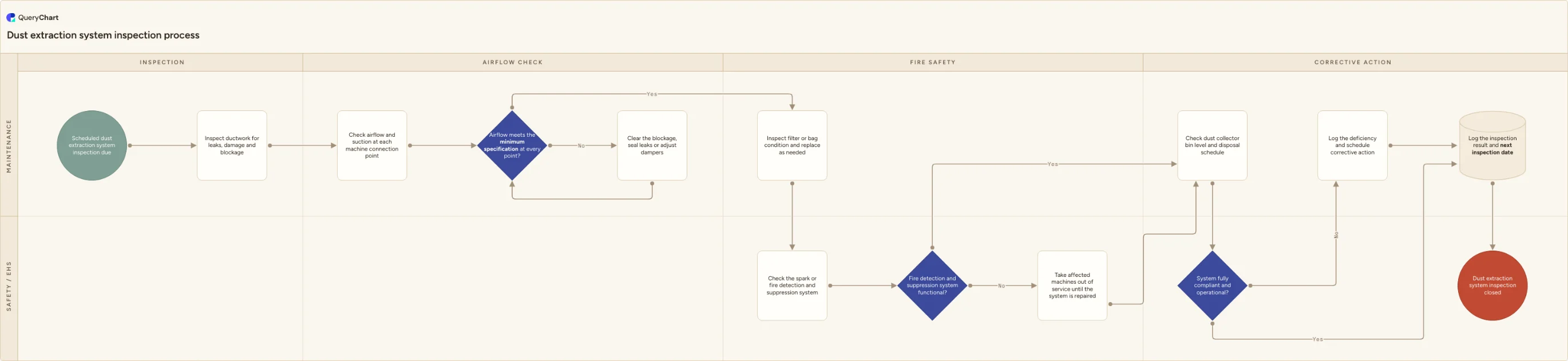
Dust extraction system inspection process flowchart
A dust extraction system inspection process flowchart covering airflow verification at each connection point, filter condition, and a spark/fire detection check.
What the dust extraction system inspection process is
A dust extraction system is easy to treat as background infrastructure that just runs, right up until a blocked duct or a failed suppression system turns wood dust — a genuine fire and explosion hazard at the concentrations a woodshop can generate — into an active risk. This template inspects the system as its own subject, not as an incidental check performed only when someone notices reduced suction at their station.
Checking airflow at every individual connection point, rather than just confirming the main collector is running, is what catches a problem specific to one machine or one branch of ductwork — a system that shows healthy overall airflow can still have a single station with a partial blockage that's invisible unless it's checked directly.
The process runs across four phases (inspection, airflow check, fire safety and corrective action) and two lanes (Maintenance and Safety/EHS), with fire and spark detection getting its own dedicated check separate from the airflow and filter inspection, since it's a distinct safety system with its own failure mode and consequence.
What this flowchart covers
In this template
- Ductwork inspection for leaks, damage and blockage, as the physical foundation the rest of the inspection builds on.
- Airflow and suction verification at every individual machine connection point, not just at the main collector.
- Filter or bag condition inspection with replacement as needed, since a clogged filter reduces system effectiveness even with clear ductwork.
- A dedicated spark or fire detection and suppression system check, with affected machines taken out of service if that system isn't functional.
- Dust collector bin level and disposal schedule verification, plus an overall compliance decision before the inspection closes.
When to use this template
- You are documenting dust extraction system maintenance and the current process only checks the main collector, not individual connection points.
- Reduced suction at specific stations has gone uninvestigated because overall system airflow appeared normal.
- Fire and spark detection system checks aren't documented as their own dedicated inspection, distinct from general airflow and filter checks.
- You need a documented policy for taking machines out of service when fire suppression isn't confirmed functional.
How it works
Check airflow at every connection point, not just the collector
"Check airflow and suction at each machine connection point" catches a station-specific blockage that overall collector performance can mask — a system can show healthy total airflow while one branch is significantly restricted.
Treat fire and spark detection as its own dedicated check
The spark or fire detection and suppression system is a distinct safety system with its own failure mode — checking it explicitly, separate from general airflow and filter inspection, keeps it from being assumed fine because the rest of the system passed.
Take machines out of service if fire suppression isn't confirmed functional
"Take affected machines out of service until the system is repaired" should be a real policy, not a judgment call about whether continuing to run feels risky enough to warrant stopping — wood dust concentrations make this a genuine explosion and fire hazard, not a theoretical one.
Log deficiencies with a real corrective action schedule
"Log the deficiency and schedule corrective action" should produce an actual scheduled fix, not just a note that something needs attention eventually with no committed timeline.
Frequently asked questions
Why check airflow at each connection point instead of just confirming the main collector runs?
Because overall system airflow can look healthy while an individual branch or connection point has a partial blockage that reduces suction at just that station. Checking each point individually is what catches a station-specific problem the collector's overall performance would otherwise hide.
Why does wood dust extraction need a dedicated fire and spark detection check?
Because fine wood dust suspended in sufficient concentration is a genuine fire and explosion hazard, and a spark from a metal contaminant hitting a saw blade or router bit is a realistic ignition source inside ductwork carrying that dust. This isn't a generic maintenance concern — it's a specific safety system that needs its own verification separate from general airflow performance.
What should happen if the fire detection and suppression system fails inspection?
Affected machines should be taken out of service until the system is repaired, rather than continuing to operate on the judgment that the risk is probably low in the meantime. This is a case where the consequence of being wrong is severe enough that the response should be automatic, not case-by-case.
How often should a dust extraction system be inspected?
This depends on your facility's dust generation rate and regulatory requirements, but it should be a stated interval logged and tracked — not an ad hoc check performed only when someone notices reduced performance at their station. The inspection record and next inspection date this process logs is what keeps the schedule actually followed.