Annual budget process flowchart
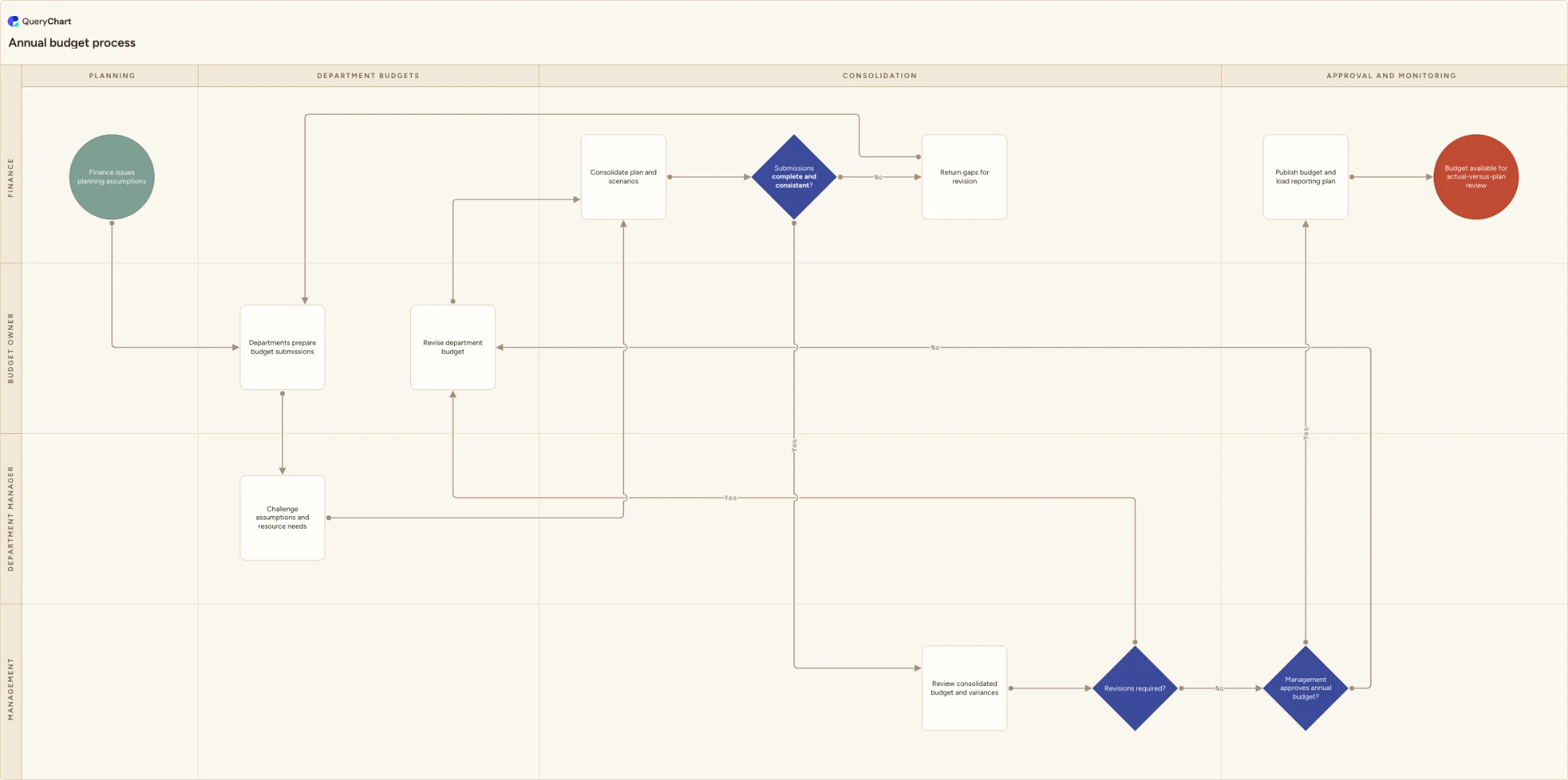
Annual budget process flowchart for finance assumptions, department submissions, consolidation, challenge, management approval, publication and actual-versus-plan review.
What the annual budget process is
An annual budget is a coordinated planning cycle, not a one-way request for departmental numbers. Finance sets a common basis, budget owners build submissions, department managers challenge resource needs, and management reviews the consolidated trade-offs before the plan is published. The workflow makes each review point visible.
The chart intentionally includes two loops: incomplete submissions return before consolidation, and a management challenge returns before final approval. Those loops turn assumptions, scenarios and trade-offs into controlled work rather than late spreadsheet changes that nobody can explain after publication.
What this flowchart covers
In this template
- Finance-issued planning assumptions and department submissions with a named budget owner.
- Consolidation, completeness validation, scenario review and a revision loop for unsupported or inconsistent inputs.
- Management approval, publication and a clear handoff to actual-versus-plan monitoring.
When to use this template
- You are documenting an annual planning calendar across finance, departments and management.
- Budget versions proliferate because review and revision decisions are not owned or recorded.
- You need an editable planning workflow before implementing budgeting or forecasting software.
How it works
Publish common assumptions
Set the planning period, cost and volume assumptions, scenario basis, templates and submission deadline before departments start.
Challenge before approval
Decide who tests completeness, which variances need explanation and how requested changes are returned to the responsible budget owner.
Connect the approved plan to reporting
Load the approved version into reporting with version control so actual-versus-budget analysis uses the decision that management approved.
Frequently asked questions
What are the stages of an annual budget process?
Typical stages are planning assumptions, department submissions, consolidation, completeness and scenario review, management challenge, approval, publication and monitoring actual performance against the approved plan.
Why does budgeting need a revision loop?
Departments may submit incomplete data or management may challenge assumptions after consolidation. A defined loop keeps changes attributable and ensures the final approved plan is based on a consistent version.
What happens after the budget is approved?
The approved plan is published and loaded into reporting. Finance and budget owners then compare actual results and forecast changes against that controlled baseline.