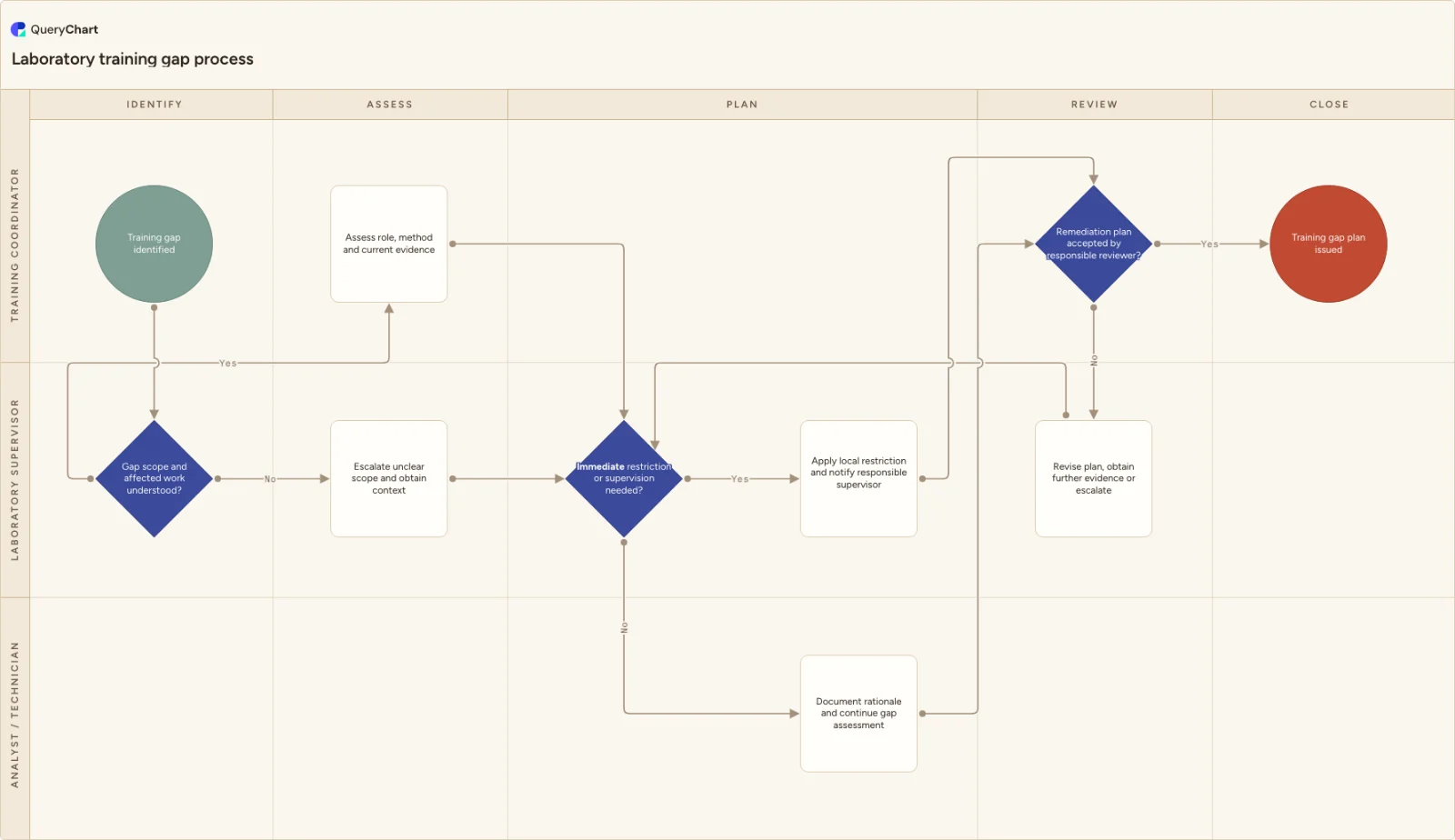
Laboratory training gap process flowchart
A laboratory training gap workflow for understanding affected work, assessing current evidence, applying local restrictions or supervision, approving remediation plans and escalating unresolved gaps.
What the laboratory training gap process is
The process starts by establishing the scope of the gap and the work it may affect. It then separates cases requiring an immediate local restriction or supervision decision from those that can proceed through ordinary remediation planning.
Adapt the restriction language, evidence sources, coaching activities and review authority to your quality system. This template describes a configurable process, not a universal safety or competency rule.
What this flowchart covers
In this template
- Gap-scope clarification and escalation for missing context.
- Assessment of affected work and locally appropriate restriction or supervision.
- Remediation-plan approval with a rework or escalation loop.
When to use this template
- A training, qualification or competency gap has been identified.
- A supervisor needs to decide whether affected work needs temporary local controls.
- Training coordinators need a documented route from gap assessment to remediation.
How it works
Define gap categories
Use the roles, methods and evidence types that make a gap meaningful in your laboratory.
Set local controls
Describe who decides on restriction or supervision and how that decision is communicated locally.
Assign remediation owners
Name the people responsible for coaching, evidence collection and plan acceptance.
Frequently asked questions
What is a laboratory training gap process?
It is a route from a reported gap through scope assessment, local controls where needed, remediation planning and responsible review.
Does every gap require a restriction?
No. The chart asks the responsible team to decide based on local context and documents the rationale either way.
What if the remediation plan is rejected?
The workflow returns to assessment for a revised plan, further evidence or escalation.
Where this process fits
In most operations this process follows Analyst competency assessment process flowchart.
Comes before
- Analyst competency assessment process flowchart — An analyst competency assessment workflow for confirming current criteria and method versions, observing performance, recording evidence, providing focused coaching and escalating unaccepted competency dispositions.