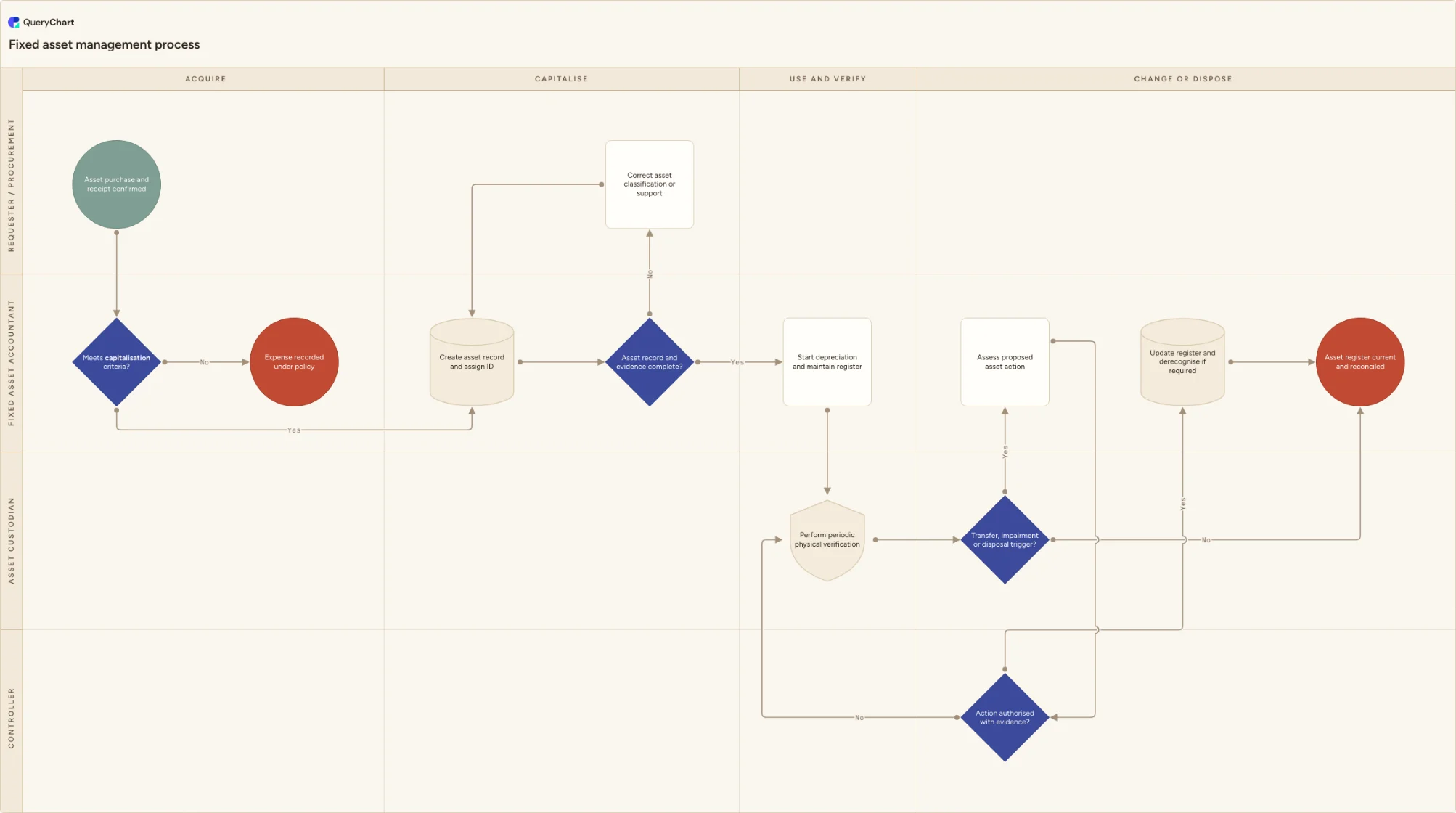
Fixed asset management process flowchart
Fixed asset management process flowchart for capitalisation assessment, asset registration, depreciation, physical verification, transfer, impairment and disposal controls.
What the fixed asset management process is
Fixed asset management begins when an acquired item must be classified under the organisation's accounting policy. The decision is not a universal value threshold: it depends on the entity's capitalisation policy, useful-life assessment and the nature of the item. Items that do not meet the criteria are expensed; qualifying items receive an asset record and an accountable custodian.
The process continues after registration. Depreciation, physical verification and the asset register must remain connected throughout the useful life. A transfer, impairment or disposal requires evidence and approval before the register changes or an asset is derecognised, which keeps operational custody and financial records aligned.
What this flowchart covers
In this template
- Capitalisation versus expense assessment without asserting a universal accounting threshold.
- Asset-ID creation, evidence checks, depreciation and periodic physical verification with an accountable custodian.
- A controlled path for transfer, impairment or disposal that requires approval before the asset register is updated.
When to use this template
- You need an asset-lifecycle template that connects procurement, accounting, custody and financial control.
- Asset records, physical checks and disposal decisions are currently managed as unrelated activities.
- You are documenting fixed-asset controls for close, audit or ERP implementation.
How it works
Apply your capitalisation policy
Replace the criteria decision with your organisation's current accounting policy and retain the supporting classification evidence.
Define asset-record fields
Record the asset ID, location or custodian, cost basis, useful-life method and evidence needed for ongoing verification.
Control lifecycle changes
State who may authorise transfers, impairments and disposals, and what evidence must be retained before the register changes.
Frequently asked questions
What is a fixed asset management process?
It is the controlled lifecycle for acquired assets: classification, registration, depreciation, verification, and authorised changes such as transfer, impairment or disposal.
How do you decide whether to capitalise an asset?
Use the organisation's accounting policy, which commonly considers the nature of the item, expected useful life and a policy threshold. This template intentionally does not prescribe a universal threshold.
Why perform physical asset verification?
Physical verification tests whether the register still reflects assets that exist, their location or custodian, and their condition. It can reveal unrecorded transfers, missing assets or disposal events.