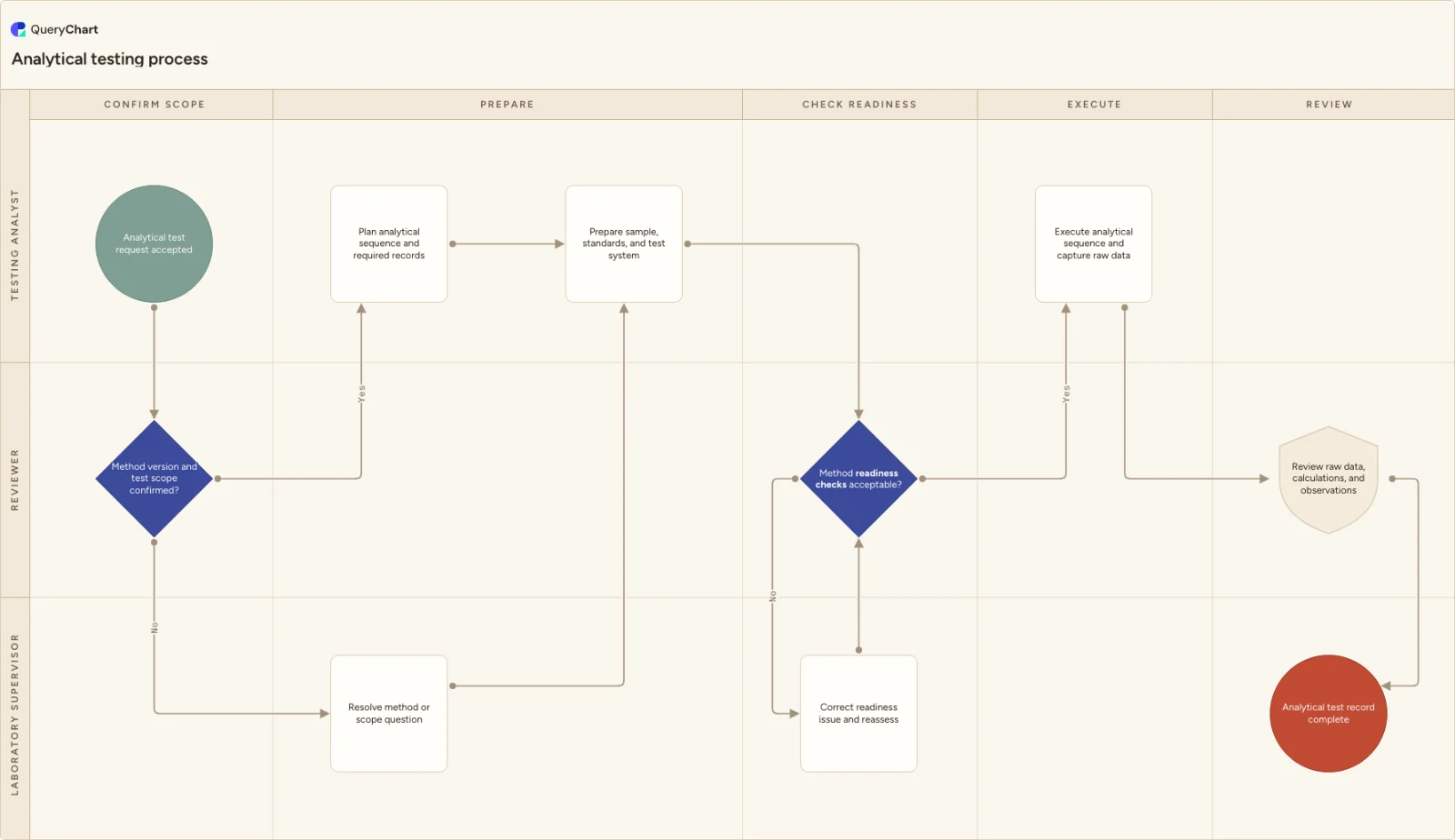
Analytical testing process flowchart
An editable analytical testing workflow for confirming method scope, preparing samples and standards, checking readiness, executing a sequence, reviewing raw data and resolving readiness failures.
What the analytical testing process is
The workflow keeps the analytical sequence behind two gates: the correct method and scope must be confirmed first, and the laboratory must be ready to run it. It then carries the raw-data and calculation review as a distinct final activity.
A failed readiness check routes to correction and reassessment rather than a quiet retry. Adapt the method, records, review roles and escalation path to the analytical work your laboratory performs.
What this flowchart covers
In this template
- Five stages from method-scope confirmation through raw-data review.
- A hold and clarification route for an unclear method version or test scope.
- A readiness decision that sends unresolved equipment, material or setup issues back for reassessment.
- Separate execution and reviewer activities so a completed run is not treated as a completed result.
When to use this template
- You need a general analytical workflow that does not impose one method or instrument on every laboratory.
- Analysts need a visible route for an unavailable resource or failed readiness check.
- You are documenting the handoff between analytical execution and review.
How it works
Set method-scope ownership
Name the source that confirms the current method, requested analysis and reporting scope. Decide who resolves a conflict before sample preparation begins.
Describe readiness locally
Add the equipment, standards, controls, materials and records that the applicable method requires. Do not turn local readiness criteria into a generic rule for every analysis.
Define the reassessment record
State how a readiness failure, correction and reassessment are documented. Include the point at which an unresolved issue must be escalated instead of repeatedly retried.
Frequently asked questions
What are the main stages of an analytical testing process?
The chart confirms method scope, plans and prepares the work, checks readiness, executes the analytical sequence, then reviews raw data, calculations and observations before the record is complete.
What happens when an analytical readiness check fails?
The work is corrected and reassessed through the documented route. The chart does not treat a failed check as permission to continue or to repeat a run without recording what changed.
Can this template be used for any analytical method?
It is a configurable starting point. Add the method-specific equipment, preparation, controls, calculations, review requirements and escalation rules that apply to the intended work.
Where this process fits
In most operations this process follows Sample preparation process flowchart and hands off to Test method execution process flowchart.
It is one step in Laboratory testing.
Step 2: Sample preparation process flowchart
An editable sample preparation workflow for confirming instructions and sample status, preparing materials, checking the preparation record, correcting issues and handing prepared samples to testing.
Step 3: Analytical testing process flowchart You are here
An editable analytical testing workflow for confirming method scope, preparing samples and standards, checking readiness, executing a sequence, reviewing raw data and resolving readiness failures.
Step 4: Test method execution process flowchart
An editable test method execution workflow for confirming an approved instruction, setting up work, checking readiness, capturing raw data, reviewing the result package and escalating unavailable resources.