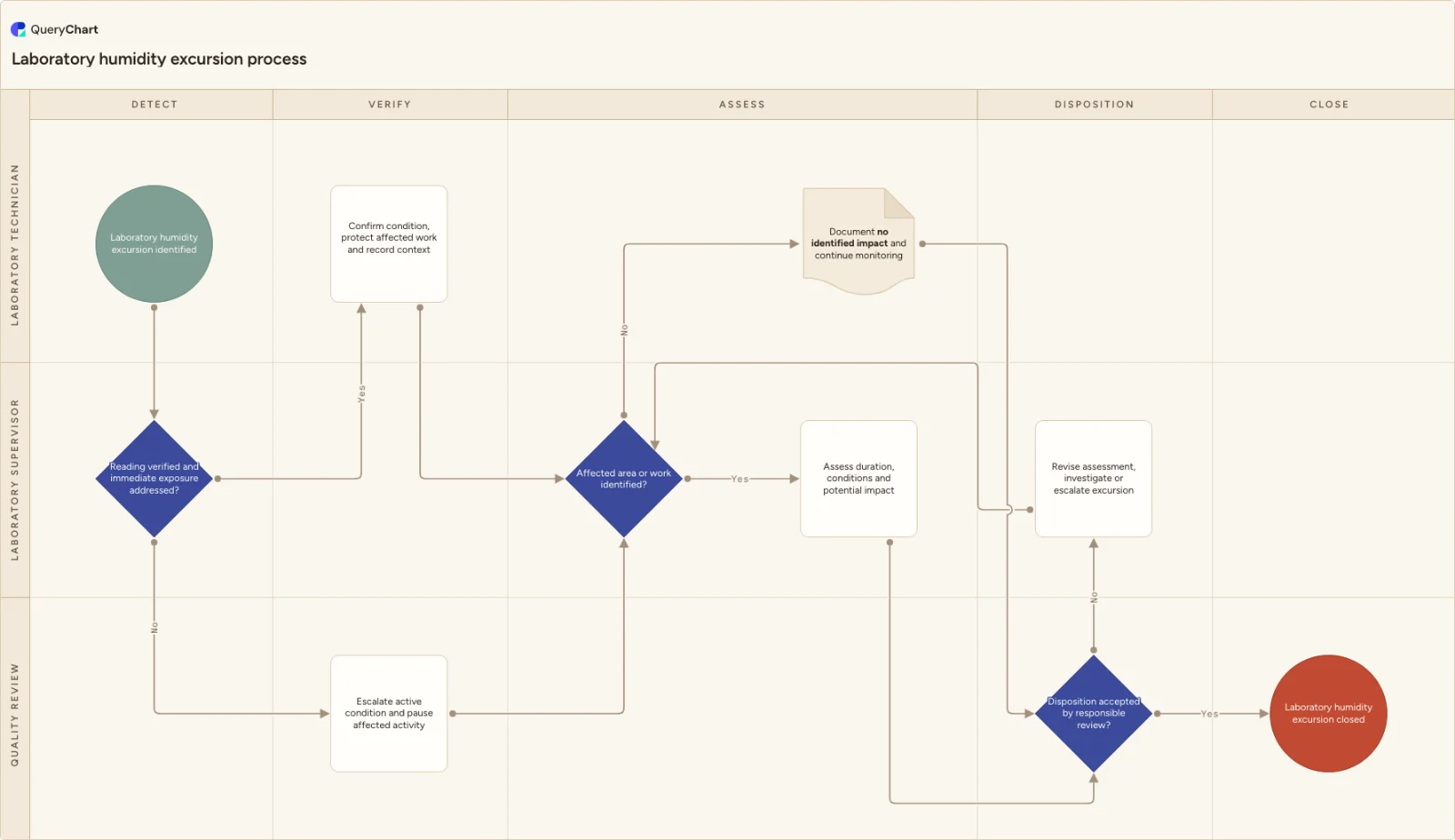
Laboratory humidity excursion process flowchart
A laboratory humidity excursion workflow for verifying a reading, protecting affected work, identifying the area, assessing duration and context, reviewing disposition and escalating unresolved cases.
What the laboratory humidity excursion process is
The process separates verification from assessment: a team first establishes that the condition is real and immediate exposure has been addressed, then determines what area or work needs review. The disposition path makes the rationale and responsible reviewer explicit.
Configure the decision criteria, facilities contacts, affected-work controls and records to your laboratory's approved programme. The template does not set humidity limits or make a compliance claim.
What this flowchart covers
In this template
- Reading verification and immediate protection of affected work.
- Area identification and an assessment path for duration and context.
- Disposition review with investigation or escalation when the response is not accepted.
When to use this template
- A humidity alarm or observation needs a repeatable response map.
- You want to show the difference between verification, impact assessment and disposition.
- Laboratory, facilities and quality teams need clear exception handoffs.
How it works
Define local entry conditions
Use the alarm, observation and reporting terms that open an excursion in your approved programme.
Name affected-work controls
Add the local process for identifying and protecting work while an assessment is open.
Review escalation ownership
Assign the actual facilities, quality and laboratory roles that decide or investigate unresolved cases.
Frequently asked questions
What does a humidity excursion process include?
It maps verification, protection, area identification, assessment, accountable disposition and an escalation loop.
Does the template provide an acceptable humidity value?
No. Set all values and acceptance rules through the approved requirements applicable to your facility and work.
Why does a rejected disposition loop back?
The loop requires more assessment, evidence or escalation before the record can close.